The thousands of trees recently found to have been cut during inspections by the Ministry of Environment have brought back into the public spotlight an issue that WWF-Romania has been raising for years: forest vegetation located outside the national forest fund.
This is what we have often called “Nobody’s Forests” – not because they have no owners, but because they have remained in a grey area between agricultural and forestry legislation. This grey area also extends to funding: some areas may lose certain forms of agricultural support as forest vegetation develops, without automatically becoming eligible for equivalent forestry support, creating an incentive to remove the vegetation.
The Slătioara case, where the authorities announced that more than 5,800 illegally cut trees had been identified, has once again drawn public attention to this category of land.
For WWF-Romania, however, the issue goes far beyond an isolated case of timber harvested without complying with the rules on timber assessment and transport. The broader question is: what do we want, strategically, from the more than 1.5 million hectares of such landscapes, and what rules and funding instruments can guide their appropriate management according to the ecological and productive value of each area?
Romania needs more forests, but it also needs sustainably managed silvopastoral landscapes. We need to determine where the development of forest vegetation should be encouraged to increase ecological connectivity and ecosystem services, and where the traditional mosaic of grasslands, hay meadows, trees and patches of woodland should be preserved. At the same time, in both situations, we need to make legal and traceable timber harvesting much more feasible.
More Than Just Trees Outside the Forest
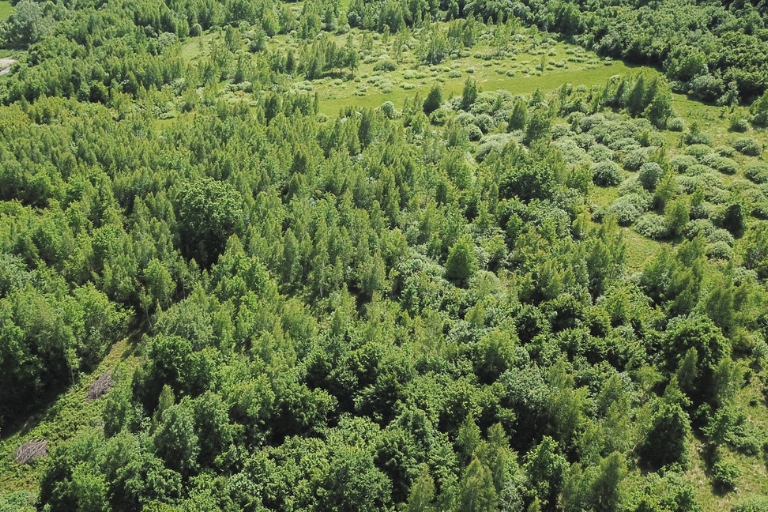
In Romania, more than 1.5 million hectares are covered by various forms of forest vegetation located outside the national forest fund.
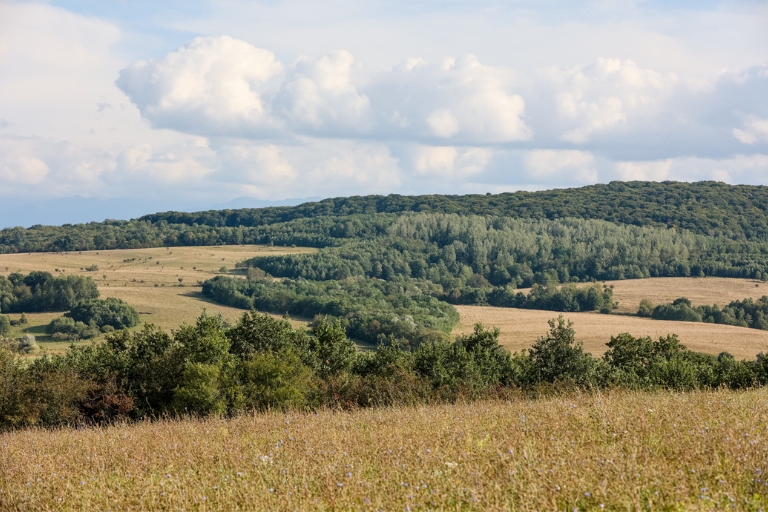
Some are former agricultural land, pastures or hay meadows where trees have become naturally established, forming actual forests – more than 500,000 hectares, according to the National Forest Inventory. Others are silvopastoral landscapes – grasslands with trees, patches of woodland and hay meadows – shaped and maintained over generations through traditional farming practices.
Administratively, these areas may be classified as agricultural land. Ecologically, however, they are either forests as ecosystems or semi-natural grasslands with forest vegetation, creating a high level of landscape diversity.
This vegetation protects the soil, helps regulate the water regime and supports connectivity between habitats and forest areas, provides shelter and breeding grounds for species, and stores carbon. On agricultural land, trees improve the microclimate, reduce erosion and the effects of extreme temperatures, and can support grassland productivity and resilience to drought. In mosaic landscapes, forest edges and the alternation of habitats support high levels of biodiversity.
This is why solutions for “Nobody’s Forests” must be developed together with landowners, so that the use and management of these areas can make the most of both their economic potential and the benefits they provide to nature and society. Where these benefits depend on maintaining and properly managing forest vegetation, landowners must be encouraged and supported to do so.
The benefits provided by these areas extend to society as a whole. They include protecting water resources and soil, conserving biodiversity, making agriculture more resilient, and helping communities become better prepared for the impacts of climate change.
From Public Attention to a Strategic Decision
The new Forestry Code has established a legal framework for land under agroforestry use. The first step now is for the Ministry of Environment and the Ministry of Agriculture to initiate and adopt the agroforestry rules that will establish the framework for managing these areas. For WWF-Romania, this is key: clear, science-based rules that enable strategic decisions on how to maximise the protection and production functions of each type of landscape.
The rules need to provide concrete answers to three questions: where and under what conditions forests should be expanded to improve ecological connectivity; what forms of forest vegetation, and within what parameters, should be maintained in mosaic silvopastoral landscapes; and what simplified procedures are needed for the legal harvesting of timber from areas outside the national forest fund.
The solution is not “forest everywhere” or “grassland everywhere”. Some wooded grasslands and hay meadows are cultural landscapes shaped by traditional agriculture – what we call mosaic silvopastoral landscapes – and are valuable for sustainable agriculture as well as for biodiversity, tourism and recreation. Without active management, these landscapes can develop into closed-canopy forests through natural succession, losing their mosaic character and the biodiversity associated with forest edges and grasslands, whether pastures or hay meadows.
In some areas, however, forest development should be encouraged to improve ecological connectivity, protect soil and water, and support adaptation to climate change.
The key is balance, based on a science-based landscape approach: more forests where they restore connectivity and increase landscape resilience, while maintaining structurally diverse grasslands where forest vegetation forms part of a valuable mosaic.
Together with experts from academia, research, agriculture and forestry, WWF-Romania has supported the scientific development of solutions tailored to different landscapes, including through the COOP4SAFE project and the national working group dedicated to developing proposals for the management of forest and silvopastoral habitats outside the national forest fund.
These rules can help shape support mechanisms ahead of the 2028–2034 EU financial programming period, so that public funding encourages the right solution for each landscape rather than the systematic removal of forest vegetation.
Landowners Are Central to the Solution
Romania aims to increase its forested area, restore ecosystems and protect biodiversity, yet landowners who maintain valuable forest vegetation are not always rewarded for the benefits it provides. This is one of the contradictions highlighted by WWF-Romania.
In some situations, administrative rules or agricultural support mechanisms may even have the opposite effect: they can make removing vegetation more economically advantageous than keeping it.
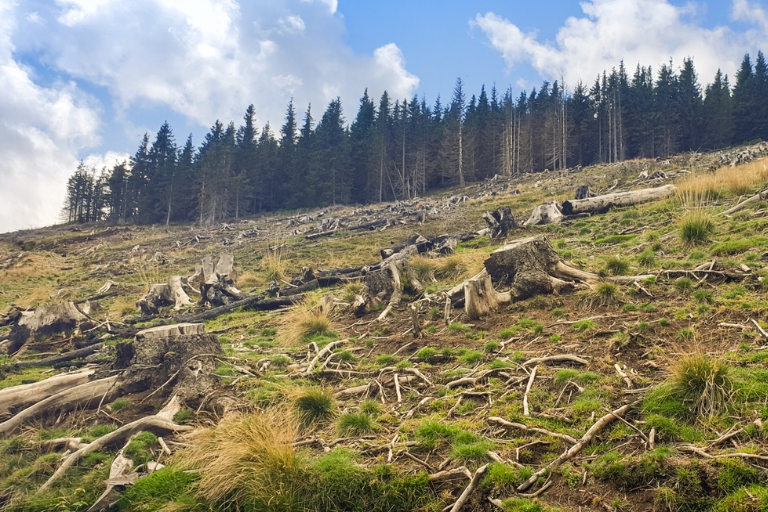
WWF highlighted this contradiction as early as 2018, showing that approximately one quarter of the forest cover loss analysed was associated with the “clearing” of forest vegetation from grasslands.
We cannot ask landowners to manage vegetation for the benefit of biodiversity, water, soil or climate if they bear all the costs while the benefits are shared by society. Where maintaining vegetation is ecologically necessary or also beneficial to agricultural production, we need incentives and compensation that make this choice viable.
The 2028–2034 EU financial programming period gives Romania an opportunity to recognise, through funding, the services provided by these lands: water and soil protection, biodiversity, carbon storage, microclimate regulation and the resilience of rural areas.
Compliance With the Law Must Be Simple
There is, however, another side to the issue. When it comes to forest vegetation outside the national forest fund, timber harvesting should not automatically be equated with illegal logging. Landowners have the right to harvest timber, including for grassland maintenance and their own household needs, under the legal framework applicable to these lands.
These landscapes should not be treated across the board as strictly protected areas. Many are cultural landscapes maintained through traditional agriculture, and their value may depend on active management, including tree removal where necessary to maintain grasslands and the mosaic of habitats.
The problem arises when timber that should be assessed, declared or tracked is not properly recorded. This is why the „missing volume” identified by the National Forest Inventory cannot automatically be equated with illegal logging: part of this “missing volume” may in fact come from vegetation legally harvested outside the national forest fund but not properly recorded in the timber traceability system.
For this reason, WWF-Romania has repeatedly proposed, including in its 2026 Timber Traceability Monitoring Report, a “SUMAL for Landowners” – a simplified procedure for declaring legally harvested timber, particularly timber harvested for personal use. The rules should not discourage landowners who want to comply with the law.
The principle is simple: traceability must remain mandatory, but complying with the law must be easier than avoiding it.
From Public Attention to a Strategic Decision
The fact that these areas have returned to public attention is welcome. The challenge now is to move the debate beyond an isolated case towards a strategic decision on the future of the more than 1.5 million hectares of forest vegetation outside the national forest fund.
The first step is the agroforestry rules. Initiated by the authorities responsible for environment and agriculture and grounded in science, they need to establish where Romania should encourage forest expansion, where it should preserve and manage silvopastoral landscapes, and how legal harvesting and traceability can be simplified.
This decision must be linked to the 2028–2034 EU financial programming period, so that public support helps landowners adopt the right solution for each landscape and rewards the ecological values that benefit society as a whole.
“Nobody’s Forests” have owners and are part of communities. WWF-Romania has been drawing attention to this grey area for years. The challenge is not to make a simplistic choice between forest and grassland, but to put in place clear rules, economically supported ecological solutions, and management that delivers benefits for nature, agriculture and communities.