
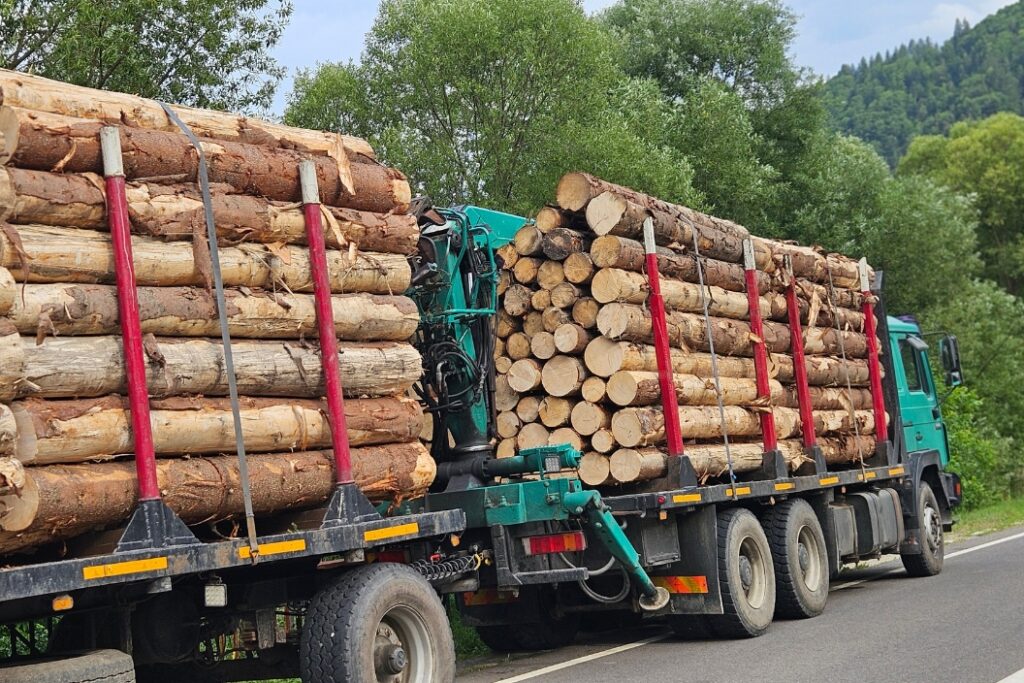
SUMAL already collects the necessary data. The challenge is no longer collecting information, but using it intelligently to strengthen prevention and target controls towards high-risk areas.
In the context of the revision process of SUMAL 3.0, a new monitoring report by WWF-Romania shows that non-compliance related to timber traceability is evolving, even though shipments without documents of origin appear to be declining. At present, one of the system's main vulnerabilities remains the lack of automated prevention mechanisms capable of detecting and signalling, in real time, differences between the declared quantities of timber and those actually transported.
Although SUMAL already collects photographs of the load as an „electronic seal” of the transport, the system still lacks an automated mechanism capable of correlating the images with the volume of timber recorded in the transport document and generating alerts for shipments that present a risk of non-compliance.
“The report's findings show that the problem is no longer the lack of data, but their insufficient use for the prevention and automated detection of non-compliance.”
Cătălin Vasile, forestry expert at WWF-Romania
To address this challenge, WWF-Romania proposes that the next generation of SUMAL transition from a predominantly reactive control model to a system focused on prevention, automation and risk-based control, using the data and images already available to automatically validate the information entered, generate risk alerts and efficiently direct field inspections.
Based on the report's findings and the experience gained through monitoring timber traceability, WWF-Romania has already submitted a series of proposals to the authorities for the new SUMAL, aimed at making the system more efficient, simpler and more prevention-oriented. Unfortunately, the draft normative act appears to be stalled.
The monitoring activities were carried out between December 2025 and March 2026, before the national network of smart cameras became operational, and combined field observations with the analysis of data and images publicly available through the Inspectorul Pădurii (Forest Inspector) platform.
- During the field monitoring, 325 timber shipments carried out by 97 different entities within the jurisdiction of 13 forest districts were recorded. Among the shipments for which it was possible to assess the transported volumes, approximately one in six showed significant overloading compared to the volume declared in the transport document.
- At the same time, desktop monitoring conducted through the Inspectorul Pădurii platform on a sample of 4,300 primary transport documents analysed in February 2026 reconfirmed overloading as the main vulnerability associated with timber traceability. The monitoring also identified non-compliant practices regarding the registration of photographs in SUMAL, including images that do not allow verification of the entire load, identical photographs used for different transport documents, or cases where the same load appears associated with different declared volumes.
The report confirms SUMAL's effectiveness in reducing traditional forms of fraud, while also highlighting the need for the system to continuously adapt to emerging timber traceability risks. In this context, WWF-Romania proposes the following priority measures to strengthen the system for combating illegal logging:
- Operationalising the expedited volume estimation method provided for in the new Forest Code, enabling the rapid verification of transported timber volumes and increasing field control capacity. Such a measure would allow authorities to inspect more shipments in a shorter period of time and concentrate resources where there are indications of non-compliance.
- Operationalising the pilot areas provided for in the new Forest Code, where timber volume is assessed after harvesting, thereby reducing the differences between standing timber volume estimates and the volumes actually measured after harvesting. This would create the conditions to stimulate innovation and support the development of modern solutions for monitoring and verifying the quantities of timber placed on the market.
- Developing the concept of a „digital fingerprint of timber transports”, based on integrating the data already available in SUMAL, including photographs of the load and information on vehicle loading capacity. Automated analysis of this information would enable the generation of risk alerts for shipments presenting potential non-compliance. In an initial stage, this would help operators correct possible errors and assist authorities in identifying more quickly the cases requiring additional inspections. For this mechanism to function effectively, SUMAL 3.0 should include the automatic validation of photographs uploaded by transport operators, so that non-compliant images are rejected before the transport registration is validated, making photo verification a preventive tool rather than merely a control instrument.
In WWF-Romania's view, the next stage in combating illegal logging depends less on collecting additional data and more on making intelligent use of the data and images already available in SUMAL. The objective should be to develop a system capable of preventing non-compliance before it occurs and directing controls towards high-risk cases.
The findings and recommendations of this report outline the direction for the next generation of SUMAL: a system based on prevention, automation and risk analysis, capable of transforming the data already collected into effective tools for enforcement and combating illegal logging.