
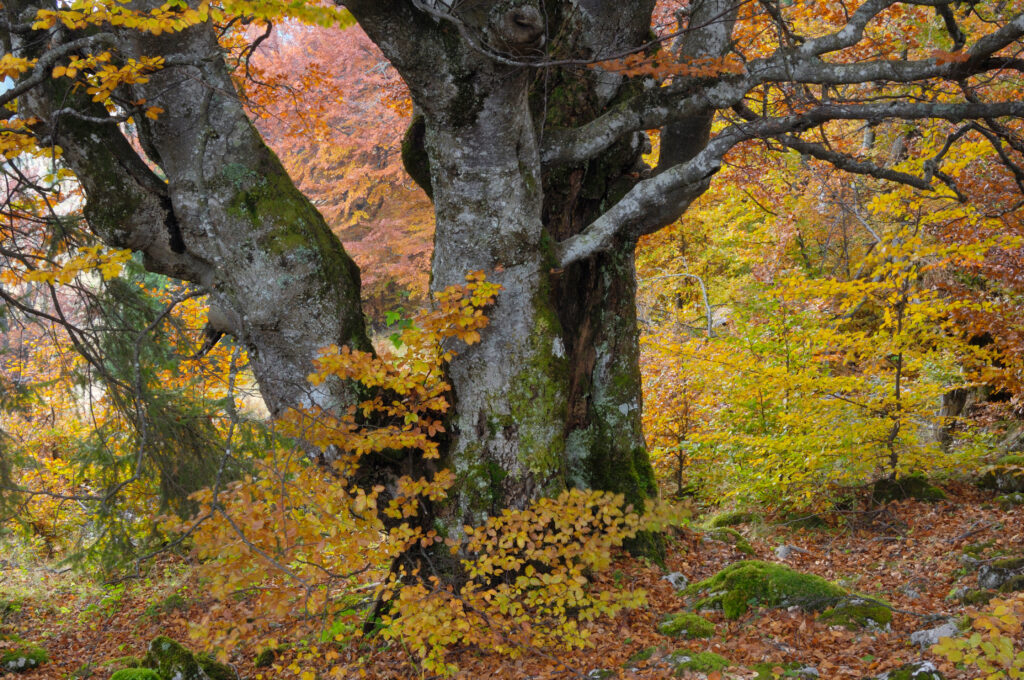
The protection of remarkable trees is entering a new phase with the development of legislation dedicated to conserving these trees of ecological, cultural, and landscape value. WWF-Romania welcomes this initiative but emphasizes that the future regulations must be adapted to the specific characteristics of the ecosystems in which these trees occur, particularly in forest environments.
Remarkable trees are living witnesses to history and local identity. Whether we are talking about veteran trees in traditional agricultural landscapes or symbolic trees that hold special meaning for local communities, they represent cultural and ecological landmarks of exceptional value. Protecting them means safeguarding the memory of places, biodiversity, and the connection between people and nature.
WWF-Romania supports the development of a functional framework for the identification, protection, and conservation of these trees and believes that initiatives of this kind can strengthen public engagement and collective responsibility toward Romania’s natural heritage.
Forests Require Distinct Rules
At the same time, we draw attention to the need for a distinct approach to remarkable trees located within the National Forest Fund, given the specific nature of forest ecosystems and the essential role that veteran trees play in maintaining forest biodiversity.
Unlike isolated trees found in grasslands or urban areas, veteran trees within forest ecosystems are part of complex natural processes. Even when they are dead, broken, or naturally fallen, they continue to support biodiversity by contributing to the formation of deadwood and microhabitats upon which numerous species of birds, insects, fungi, and mammals depend.
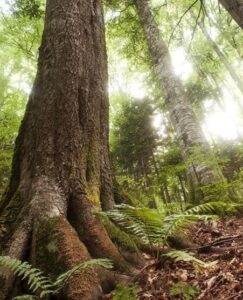
The rules designed for remarkable trees outside the national forestry fund cannot simply be transferred to forests managed under forestry regulations. The concept of a “remarkable tree” carries different meanings depending on the ecological and functional context in which it is applied. Applying the same set of criteria across all environments may create inconsistencies and even produce outcomes that run counter to the objectives of sustainable forest management.
We cannot automatically consider all trees older than 160 years within the national forestry fund to be remarkable trees, as such ages often reflect the outcome of deliberately planned long production cycles – an objective that is intentionally pursued through the application of close-to-nature forestry practices.
Proposed Solutions: Aging Islands and Ecosystem-Specific Criteria
We consider it necessary to introduce the concept of “aging islands” within the national forestry fund as a dedicated instrument for the conservation of remarkable trees, veteran trees, habitat trees, and the biodiversity associated with them.
In forest ecosystems, the value of these trees extends beyond the living specimen itself. Their ecological role continues even after natural death or uprooting through their contribution to deadwood formation, microhabitats, and natural processes on which many species depend.
Furthermore, the ecological stability and functionality of veteran trees depend on the surrounding forest structure. In the long term, the primary objective should not be the isolated preservation of a single tree as a landscape feature, but rather the maintenance of functional forest ecosystems characterized by natural processes, diverse structures, and microhabitats associated with deadwood.
For the national forestry fund, WWF-Romania proposes:
- Distinct regulations for veteran trees, habitat trees, and biodiversity trees, integrated into the forestry framework;
- Designation criteria adapted to the specific characteristics of forest ecosystems and close-to-nature forestry;
- The implementation of the “aging islands” concept to protect remarkable and veteran trees while maintaining their ecological stability and associated biodiversity;
- The retention of veteran trees, remarkable trees, and habitat trees as biodiversity features even after they enter the deadwood stage;
- The development of a landscape-scale network of aging islands to increase the structural diversity of forests and strengthen their resilience.
From Compensation to Incentives for Landowners
We also propose a shift in the way support is provided to landowners, moving from the traditional logic of compensation toward modern financial incentives for conservation. Such an approach would encourage voluntary participation and facilitate access to external, non-reimbursable funding sources.
This approach can promote voluntary engagement and create the conditions for more flexible and predictable financing mechanisms aligned with European policies on biodiversity, nature restoration, sustainable agriculture, and climate adaptation.
These measures could be integrated into European funding mechanisms linked to the Common Agricultural Policy, eco-schemes, agri-environment and climate measures, as well as future instruments supporting the implementation of the European Nature Restoration Regulation through Romania’s National Nature Restoration Plan.
Aligning conservation measures with these instruments can reduce pressure on the state budget and create a more robust foundation for the long-term implementation of conservation actions.
WWF-Romania supports the development of a coherent, practical framework tailored to the specific characteristics of Romania’s forest ecosystems, so that the conservation of remarkable trees becomes a genuine opportunity for nature, local communities, and future generations.