Romania is receiving one of the most important pieces of news for its natural heritage: the results of Cycle III of the National Forest Inventory (NFI), which confirm a positive trend regarding the state of forests and a substantial reduction in the volume of “missing timber.” This news is a reason for encouragement, but also a signal of responsibility. The results must be analyzed in depth, within a transparent public debate, especially now, on the eve of drafting the secondary legislation of the Forestry Code. It is necessary to continue and consolidate the strategic directions already initiated, as well as the reforms assumed through the National Forest Strategy 2030.
Key results of NFI Cycle III
- Increase in forest area
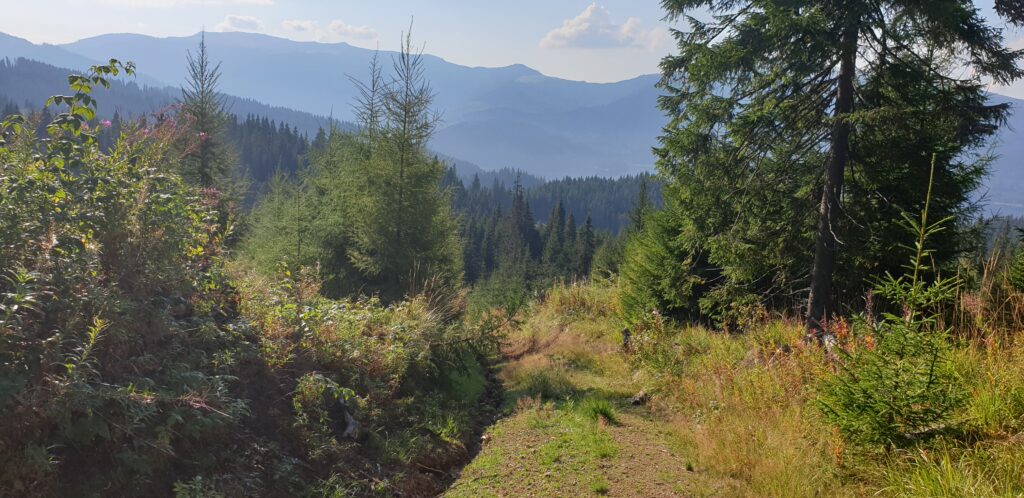
Romania’s forest area is increasing, by more than 200,000 ha, from 7 million ha (Cycle I, 2008–2012) to 7.2 million ha (Cycle III, 2020–2025), mainly through the natural afforestation of abandoned pastures. The average volume per hectare continues to increase – therefore, “the forest is growing and becoming denser.” - Timber stocks among the largest in Europe
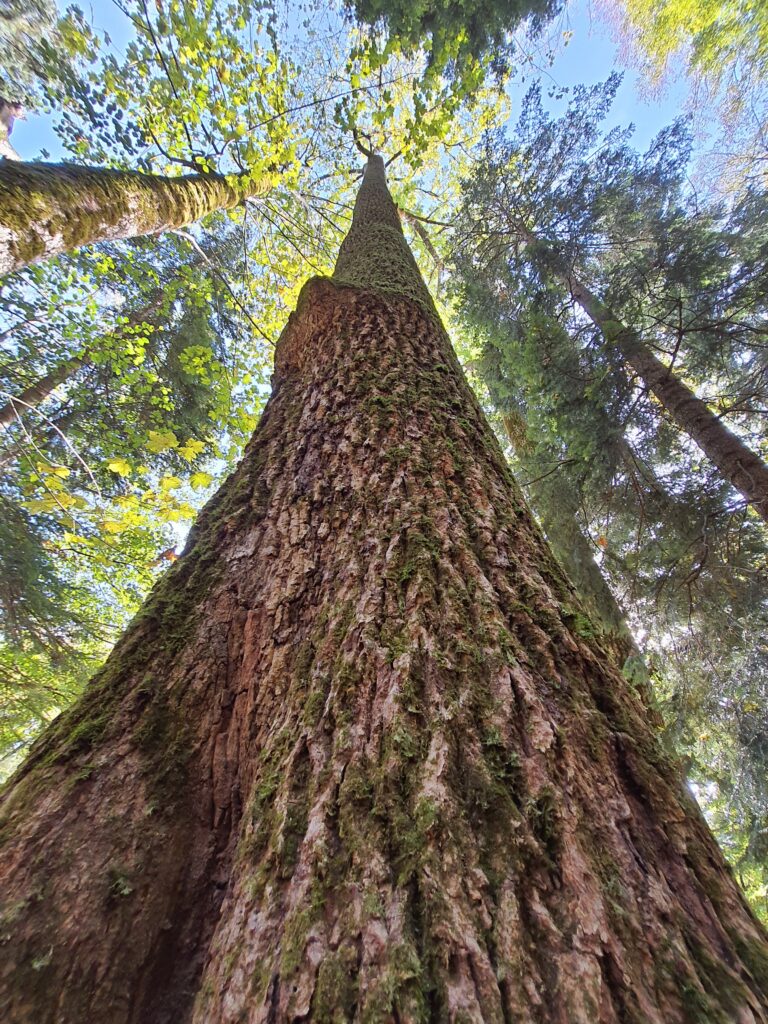
Timber stocks have increased by 25.6 m³/ha over the last 10 years, reaching 347.5 m³/ha, the highest level in the EU after Liechtenstein and Switzerland (353.9 m³/ha). The European average is 182 m³/ha (FAO, 2020 State of Europe’s Forests). - Significant reduction in the volume of “missing timber”
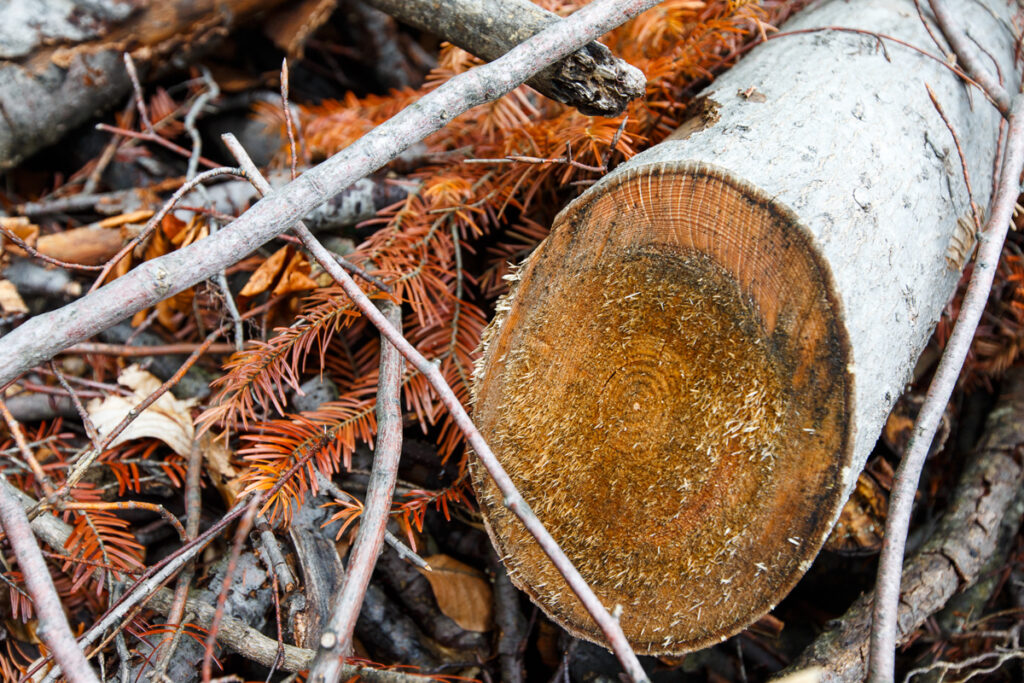
The volume of “missing timber” (i.e. understood as the difference between the harvested volume recorded in the field through NFI statistical inventories and the volume of legally authorized and reported timber) has decreased significantly from approx. 20 million m³/year (Cycle II, 2013–2018), reaching today a maximum of 8 million m³/year (Cycle III, 2020–2025).
We must take into account the fact that the NFI is not designed to specify the volume of illegal logging. As early as 2019, when the results of Cycle II were published, we pointed out that it is wrong for this “missing” volume to be interpreted as entirely representing illegally harvested timber. Indeed, this volume also captures illegally harvested timber, but it inevitably also includes various errors resulting from comparing data obtained through different methodologies, applied for different purposes.
“We can infer that the reduction in the volume of ‘missing timber’ is mainly due to a reduction in the volume of illegally harvested timber (i.e. non-fiscalized timber) if we consider that the source of statistical errors and those deriving from the use of different methodologies remains within the same parameters. We are therefore talking about an absolutely significant reduction compared to the monitoring period of NFI Cycle II (2013–2018).”
Radu Vlad – Forests Project Manager, WWF-Romania
The data published on Friday confirm the relevance of the joint efforts made over the last decade – authorities, institutions, academia, civil society, professional associations, the media, and the public – which were not in vain and succeeded in changing the course of negative developments regarding illegal timber harvesting.
The main measures that made this progress possible and that must be consolidated
The positive results are not accidental. They reflect important transformations in recent years, made possible mainly through the adoption of the following strategic directions:
- Transparency & digitalization of timber traceability. This cycle captures a period in which the integrated timber tracking system became fully applicable (through Wood Tracking, SUMAL, Inspectorul Pădurii), introducing transparency, passive control, and the collection of conclusive evidence for active controls, as well as the possibility of unannounced checks carried out by the interested public.
- Strengthening the institutional capacity of the Forest Guards, in terms of increasing control staff, allocated financial resources, and modernized logistics.
- Involvement of multiple institutions in carrying out controls: forest police, gendarmerie, border police.
- Application of dissuasive sanctions: lowering the threshold to 5 m³ for the criminal sanctioning of transports without documents proving legal origin and extending the confiscation of means of transport.
- Application of modern techniques for automated verification of data recorded in SUMAL.
- Taking over the guarding of forest areas belonging to small owners, based on the principle of territoriality, by forest districts, whose costs are covered from the state budget.
- Application of a reduced VAT rate for firewood intended for the population, as well as the introduction of a support mechanism for vulnerable consumers, through which the related costs are reimbursed based on legal documents of origin.
These measures have significantly transformed the phenomenon of illegal harvesting: from the visible disappearance of forests across entire slopes in the years following chaotic restitutions, to increasingly disguised methods, integrated into the grey economy (i.e. non-fiscalized timber).
The evolution of the modus operandi is also reflected in WWF’s annual monitoring reports, which show that, more recently, the most frequent way of placing non-fiscalized timber on the market is “overloading” (i.e. falsifying declarations of the quantities of timber materials transported), still encouraged by the system of selling standing timber, with advance payment for an estimated volume of “marked” trees, marked with an iron hammer applied to the roots in the forest.
The effort must be continued and consolidated, following the principle of simplicity – transparency – efficiency
NFI data confirm the assumed strategic directions, but major challenges remain:
- The defining elements of the architecture of the timber traceability system, provided for in the National Forest Strategy, must be established through the new Integrated Information System for Forests. Control must not be centered on marking and guarding trees in the forest, but on verifying the volumes of timber materials at the moment they are placed on the market.
- Eliminating systemic conflicts of interest. Payments related to timber contracted and harvested from publicly owned forests should be made strictly for the quantities of timber materials declared at market placement (not for the volume of standing timber estimated through the valuation act). Selling standing timber without verification of wood products at first placement on the market (at forest exit) currently represents the main cause of controversies related to illegal logging in Romania.
- Operationalization of the “digital fingerprint of transports” within a SUMAL 3.0 system that permanently closes the current loopholes.
- Establishing transparent control procedures that follow a risk-based approach (i.e. prioritizing controls based on objective and transparent criteria).
- Increasing transparency through the establishment of a public record system for control registers (according to Reg. (EU) No. 995/20105).
- Setting appropriate performance indicators regarding the fulfillment of monitoring and control duties (with an emphasis on verifying the first placement of timber on the market and operators’ compliance with due diligence obligations).
- Authorizing specialization of those responsible for measurement, sorting, and fulfilling registration procedures in SUMAL.
The need for a public debate: understanding the real state of Romania’s forests
WWF-Romania calls for a clear official analysis of all information included in the National Forest Inventory (NFI), together with the interpretation of the evolution of the obtained results, to be presented within a public debate.
The NFI is an instrument for assessing forest resources, on whose results forest policies must be based. Stakeholders and the public have the right to know in detail the interpretation of this information. In this context, WWF calls for the publication of all NFI results for which it was designed and for which there is statistical coverage, together with the working methodology and the field data collection guidelines for all three inventory cycles.
We therefore have reasons for optimism, but also the obligation to continue rigorously and transparently the strategic directions assumed through the National Forest Strategy.
On the eve of a new legislative architecture for the forestry sector, it is essential that these advances are correctly understood, publicly debated, and consolidated through coherent policies – so that Romania’s forests remain a living heritage for future generations, and nature-close Romanian forestry becomes a model of sustainable forest bioeconomy.