
In a factory founded in the heart of the communist era, on the outskirts of a Transylvanian town, people with hands covered in sawdust transform, day after day, the precious wood of Romania’s forests into sound. At Hora Reghin, tens of thousands of musical instruments are born every year, using a minimal amount of wood, yet creating enormous added value. Despite this achievement, the factory faces a major challenge: increasingly difficult access to high-quality wood. The wood is not properly sorted, and in storage yards the raw material it needs is hard to find. Forest administrators and operators prefer large clients who buy bulk quantities of wood for primary processing, while fine craftsmanship is left waiting. In this context, Hora becomes a living demonstration of what high-value wood use truly means: producing as much added value as possible from a limited but high-quality resource.
THE TRUTH BEHIND THE NUMBERS
How much wood does Romania use at high value?
- Romania harvests 20 million cubic meters of wood every year. Most of it is wasted on low value-added products.
- Less than 10% of the wood harvested nationally ends up in finished wood products with high added value (furniture components, instruments, laminated wood, quality parquet).
- Most wood goes into primary processing, biomass, or firewood – meaning it does not follow the cascading use of wood principle.
- Curly maple wood, used for violin making, is extremely rare, often sold on the grey market, and officially costs around €2,000 per cubic meter.
Beyond the Silence of Wood
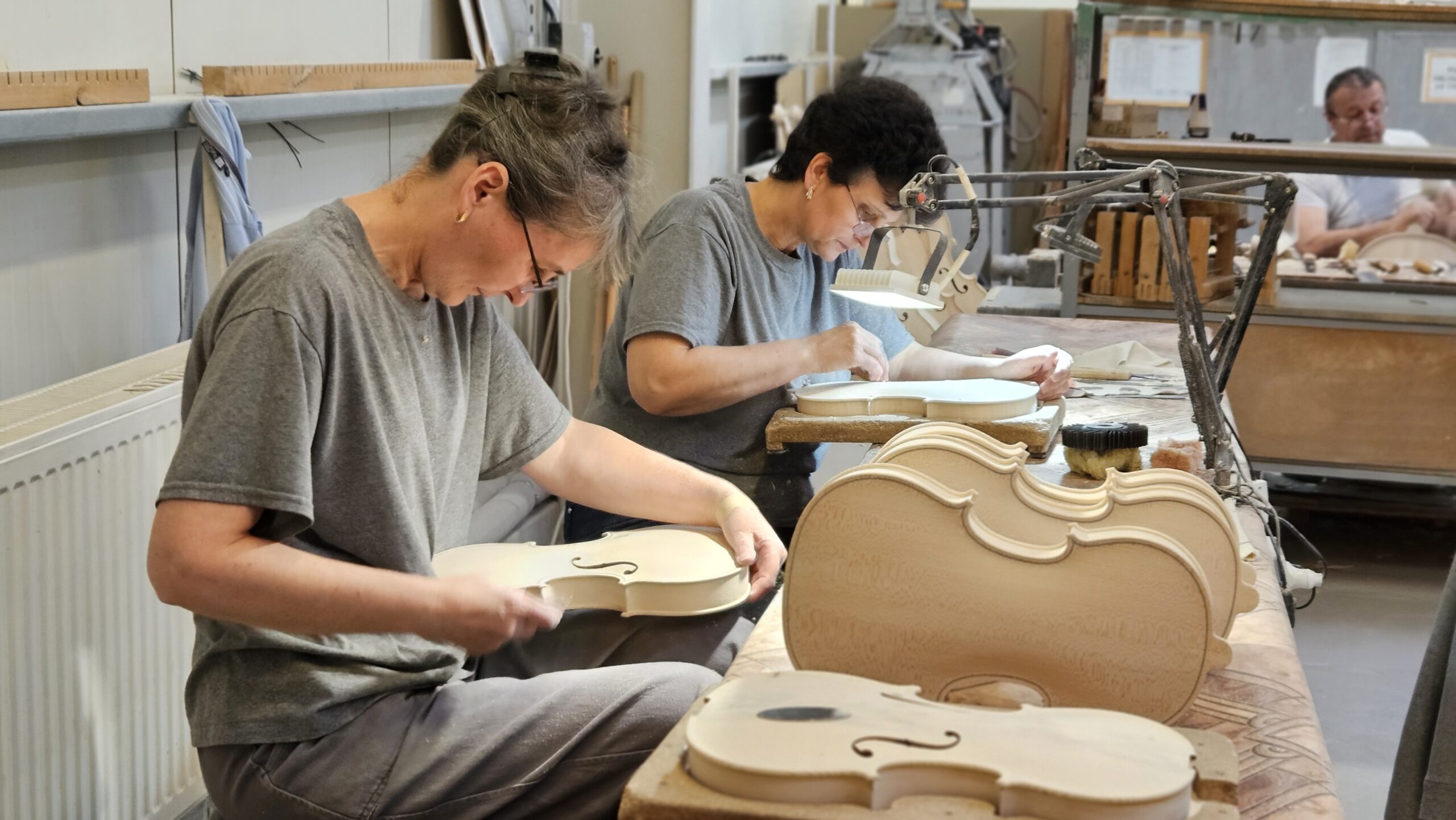
In a factory in Reghin, a freshly sanded violin lies face down on a workbench. Around it, thin curls of sawdust, tools bearing the marks of time, and hands that work without hesitation. “It’s resonance spruce,” one of the workers tells me almost in a whisper, as if speaking about a living being.
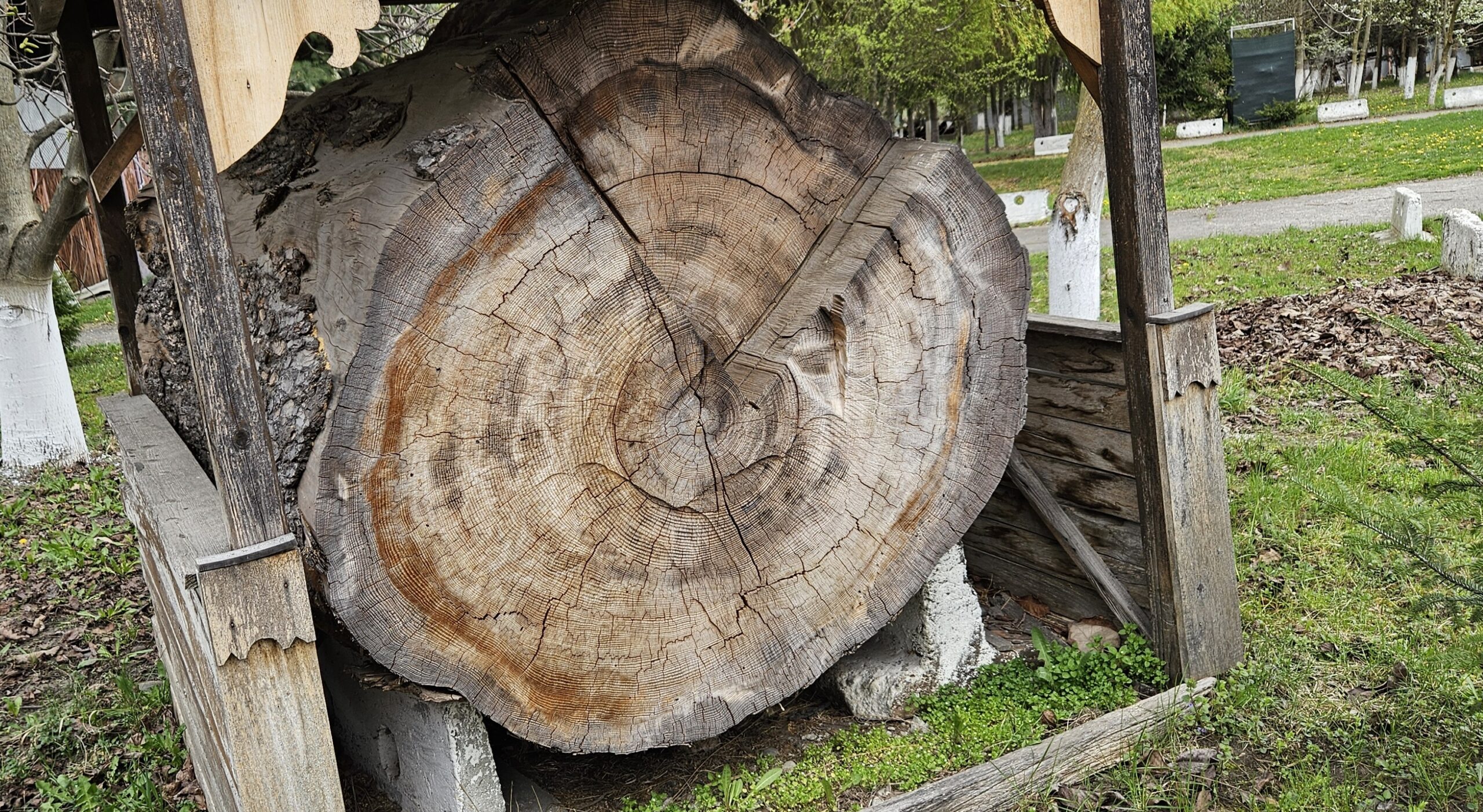
This wood, grown with care for nearly 200 years in Romania’s mountains, precisely to produce high-quality timber, will not become particleboard or firewood. It will not burn in stoves, be shredded into pellets, or turned into rough lumber. It will vibrate. It will sing. It will travel the world, under the chin of a child from our communities, on the shoulders of a French violinist, or into an orchestra on another continent. All starting here, in a factory located in a small town in Mureș County.
A Small but Essential Industry
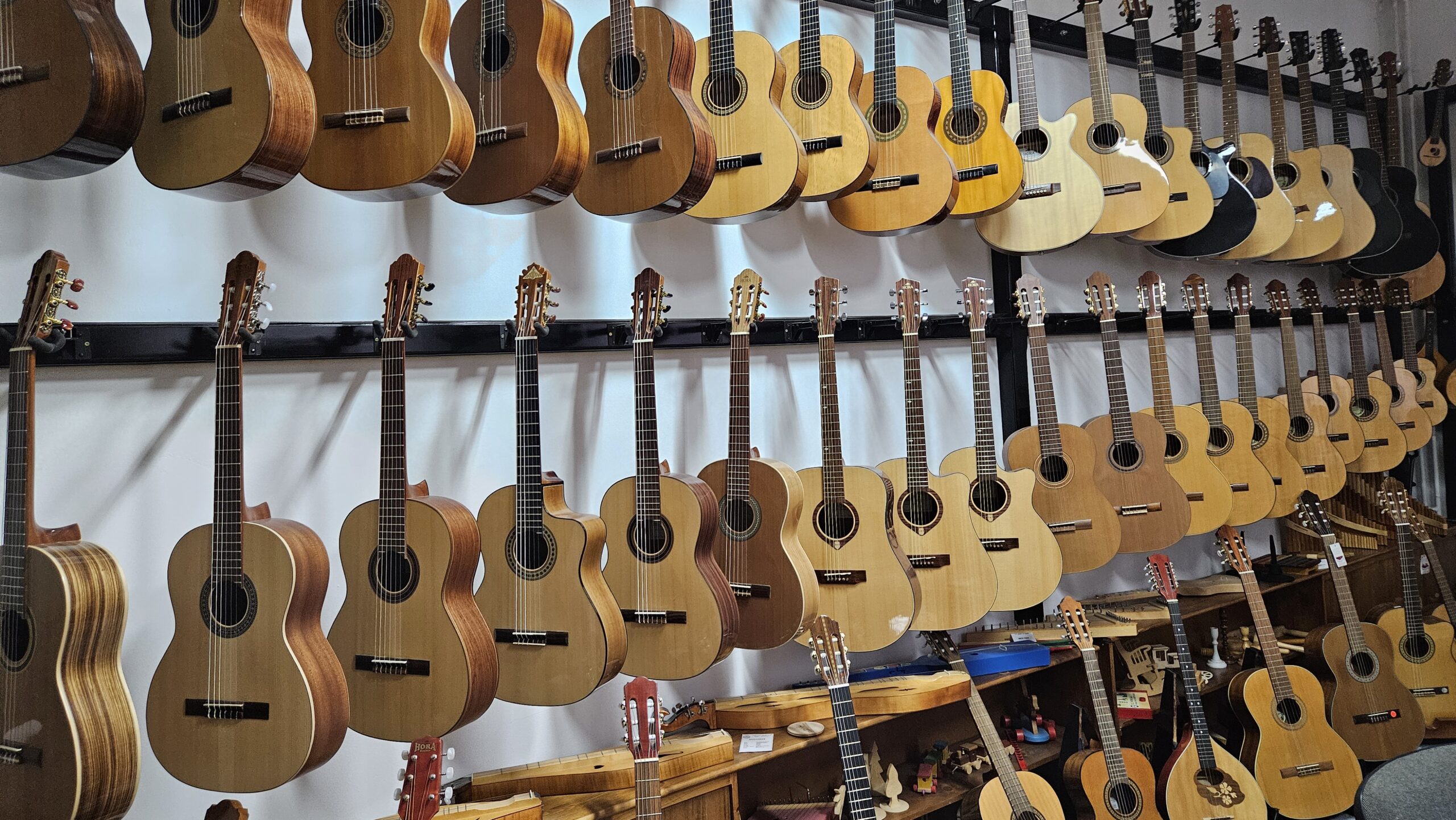
The Hora factory in Reghin is the largest producer of wooden musical instruments in Europe. Around 36,000 instruments leave its gates every year: violins, cellos, classical guitars, mandolins, cobzas. They are shipped to dozens of countries in America and Europe. All of this uses only about 1,000 cubic meters of wood per year – but it is resonance wood obtained from forests specially managed in production cycles of over 150–180 years.
This means enormous added value: with a small volume of wood, an entire economic ecosystem is created. A whole local identity. A national brand, if we wish. Without waste, using wood wisely and stimulating close-to-nature forestry.
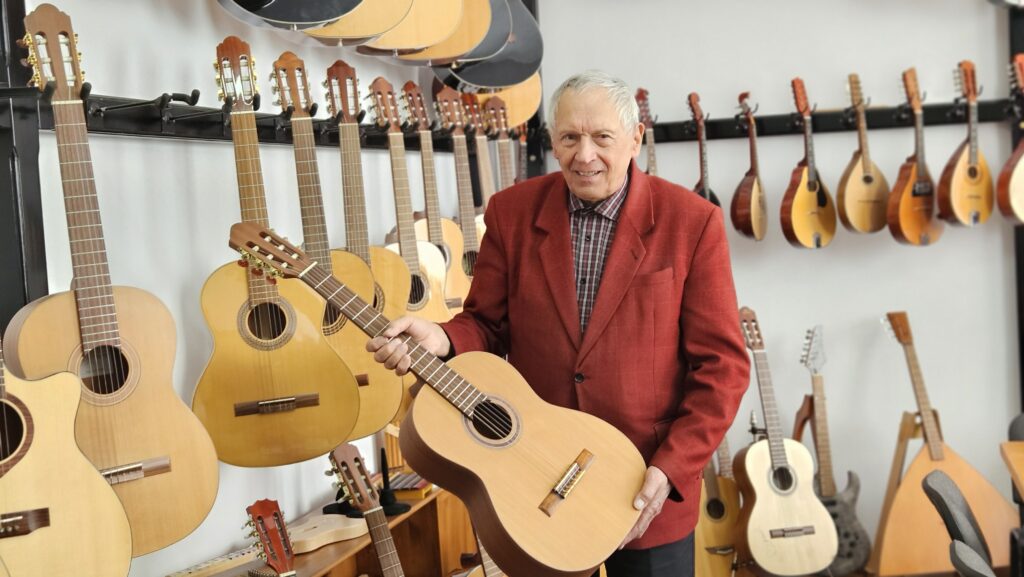
“The sound produced by an instrument is strongly influenced by the quality of the wood. In the past, we used to go personally into the forest to select the wood. We looked for trees over a hundred years old, without knots, with straight grain, capable of producing that clear sound. Resonance spruce, maple, exotic species – all must be chosen carefully and left to dry naturally for years. Then, each piece passes through the hands of dozens of people, each adding something of their skill and soul.”
He is the one who took over the factory after the 1989 Revolution, brought it back to stability, and turned it into an economic anchor for the town. Today, 170 employees work here. Many have been in the factory for decades, and some are second-generation workers.
Hard Essence – How to Create a Lot from Very Little
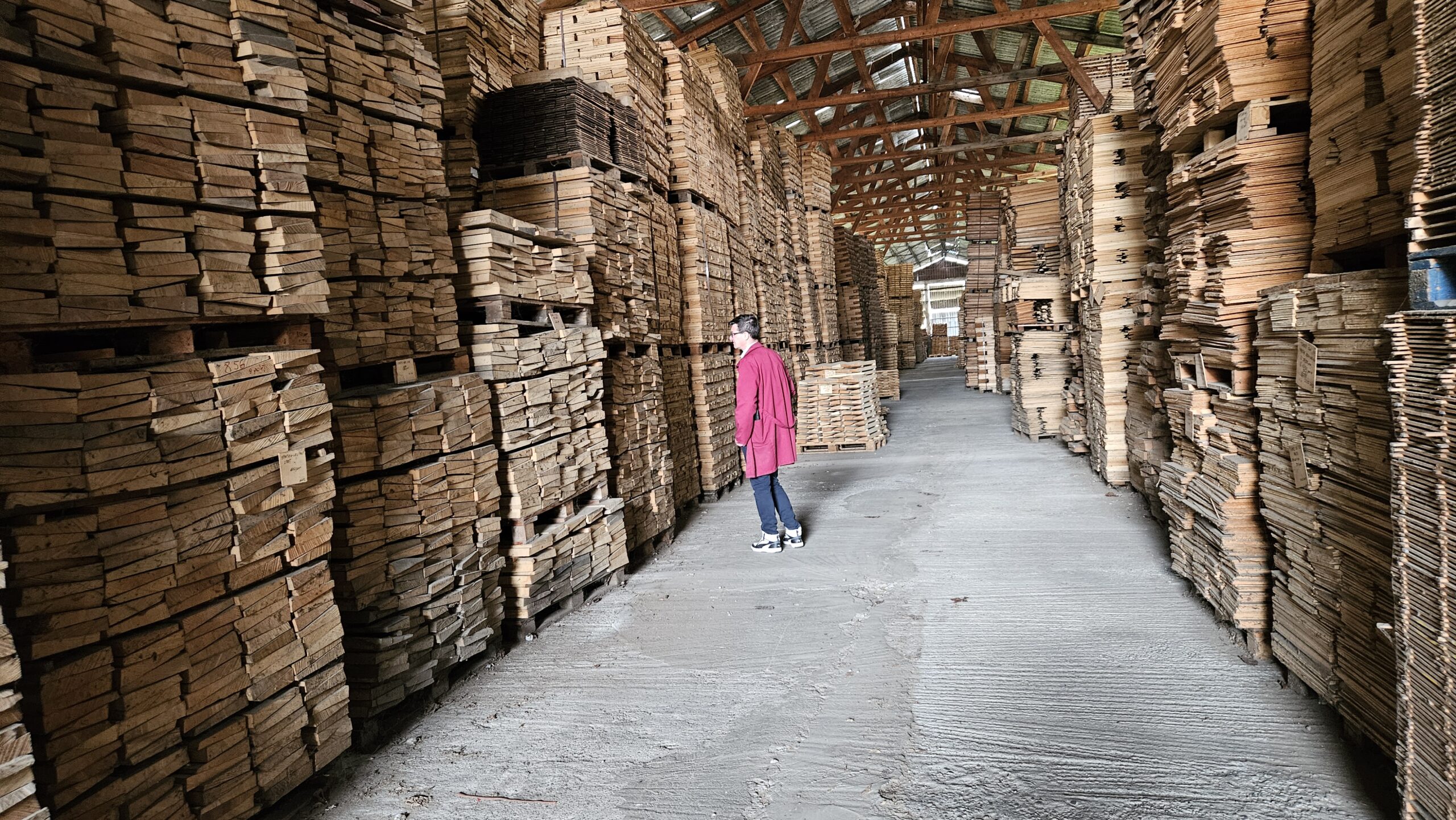
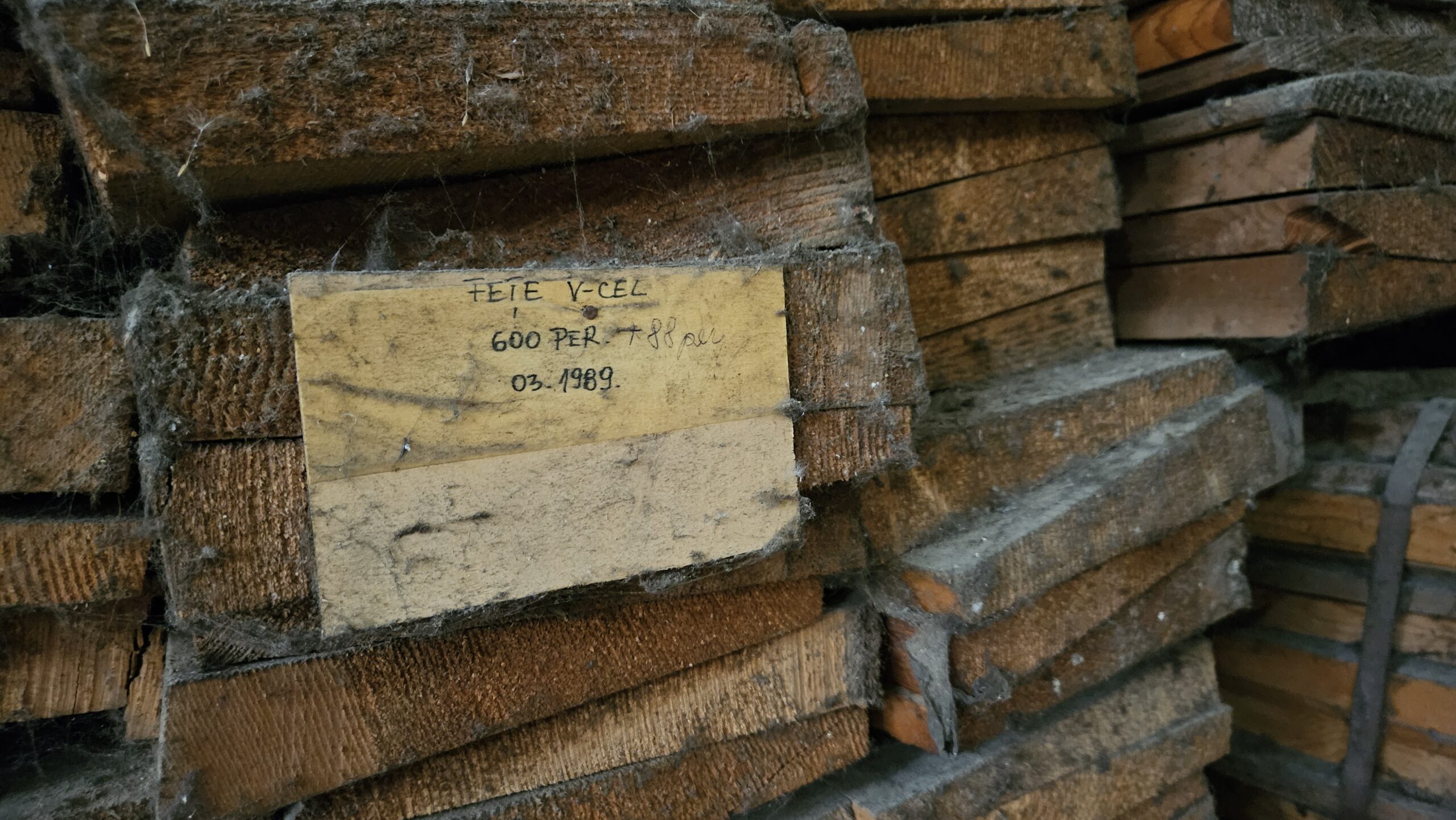
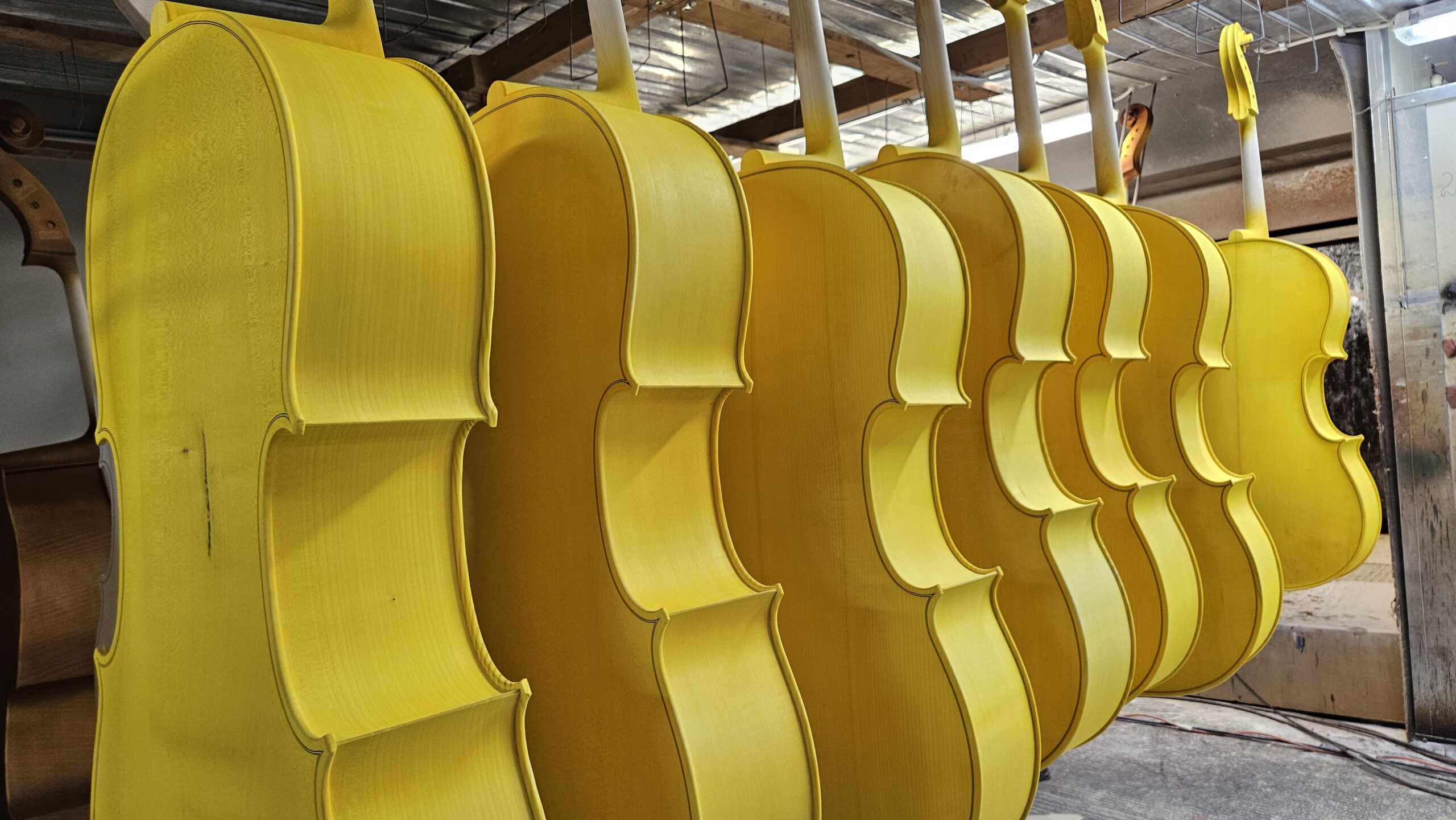
Once it arrives at the factory, the wood is naturally dried for between 3 and 10 years. This eliminates internal stresses, provides excellent resonance and stability; otherwise, it would deform and lose quality. In the long warehouses of Reghin, there is also wood that has been drying for 35 years, in the form of semi-finished products such as a violin neck.
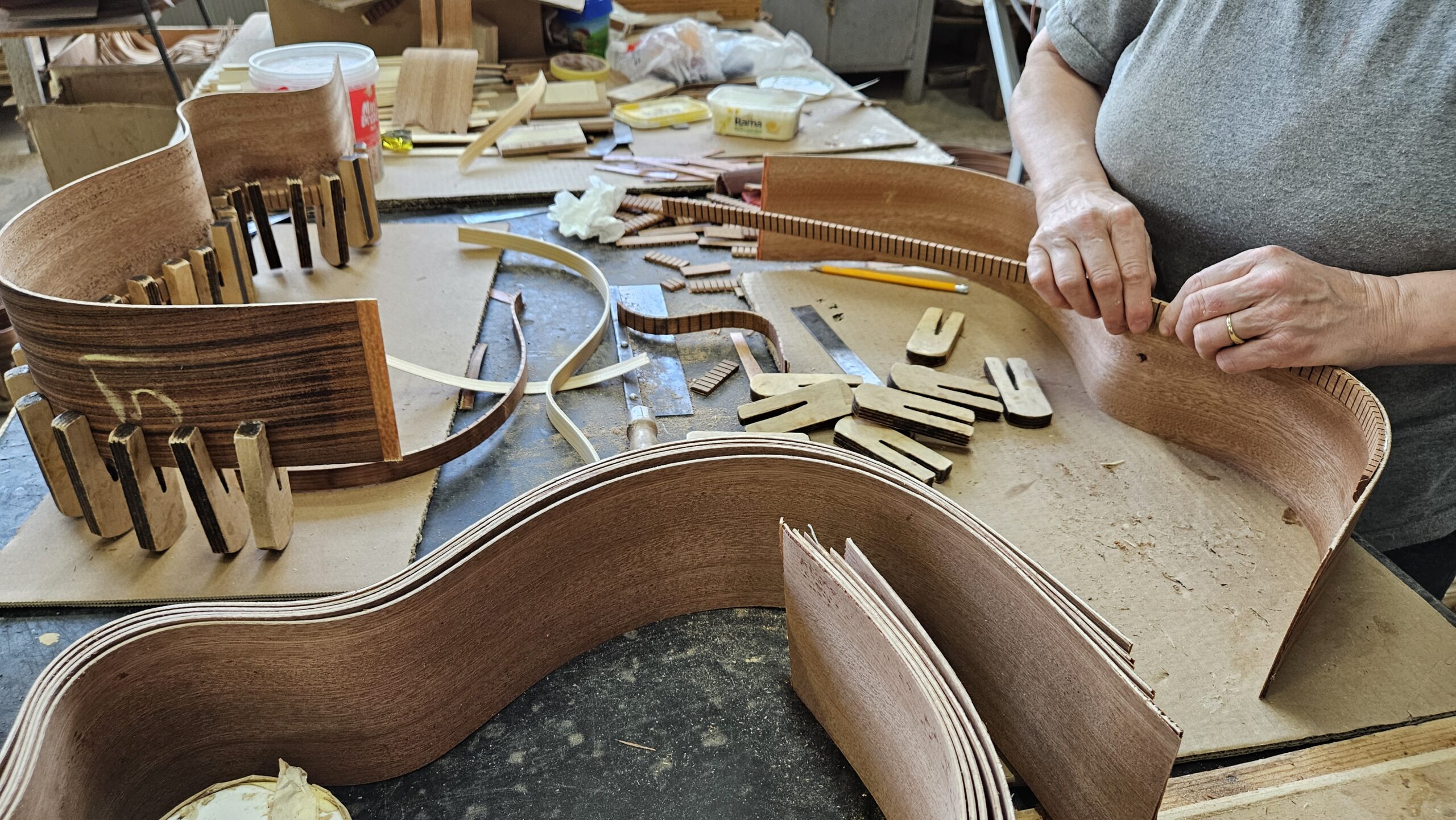
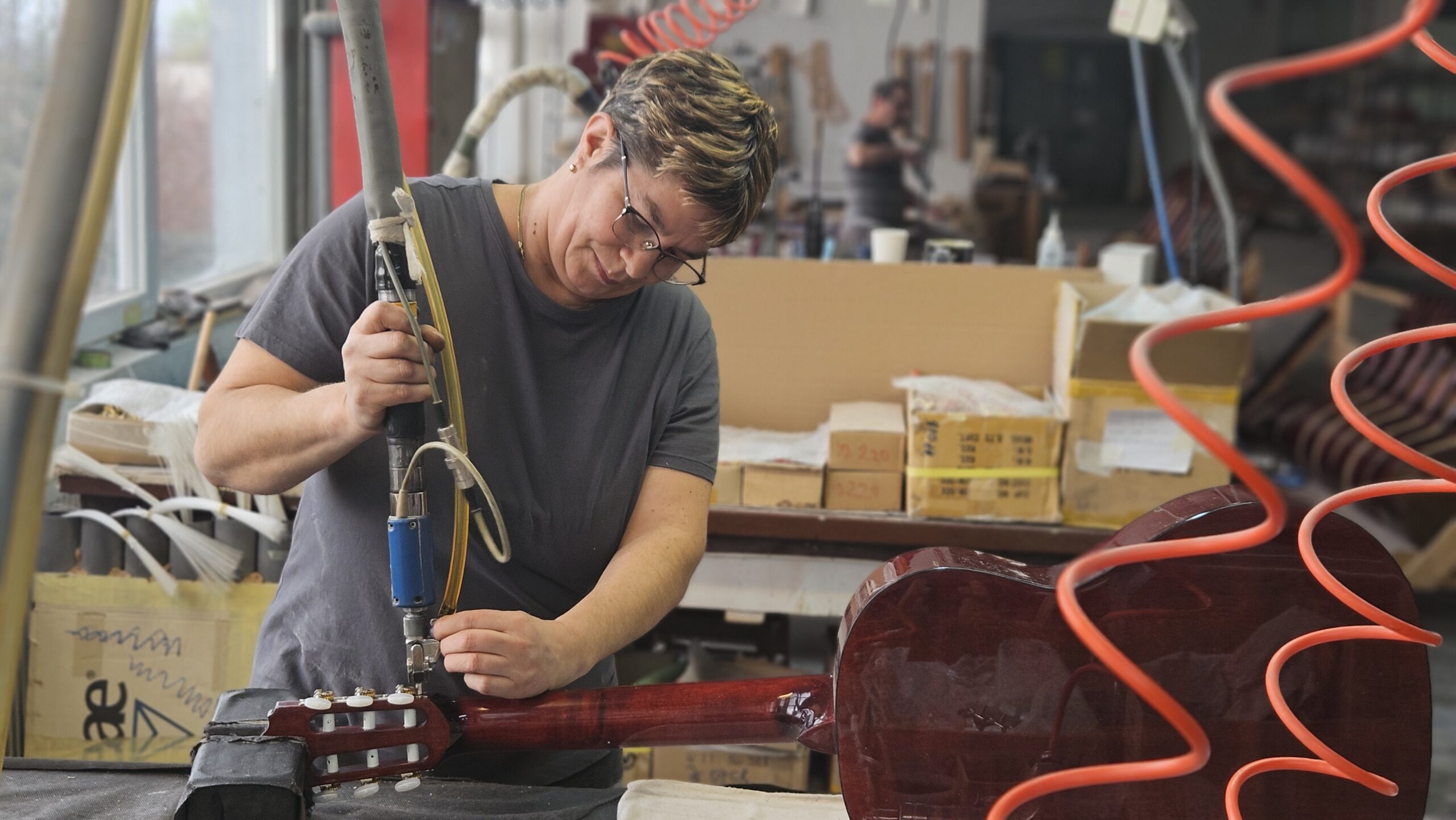
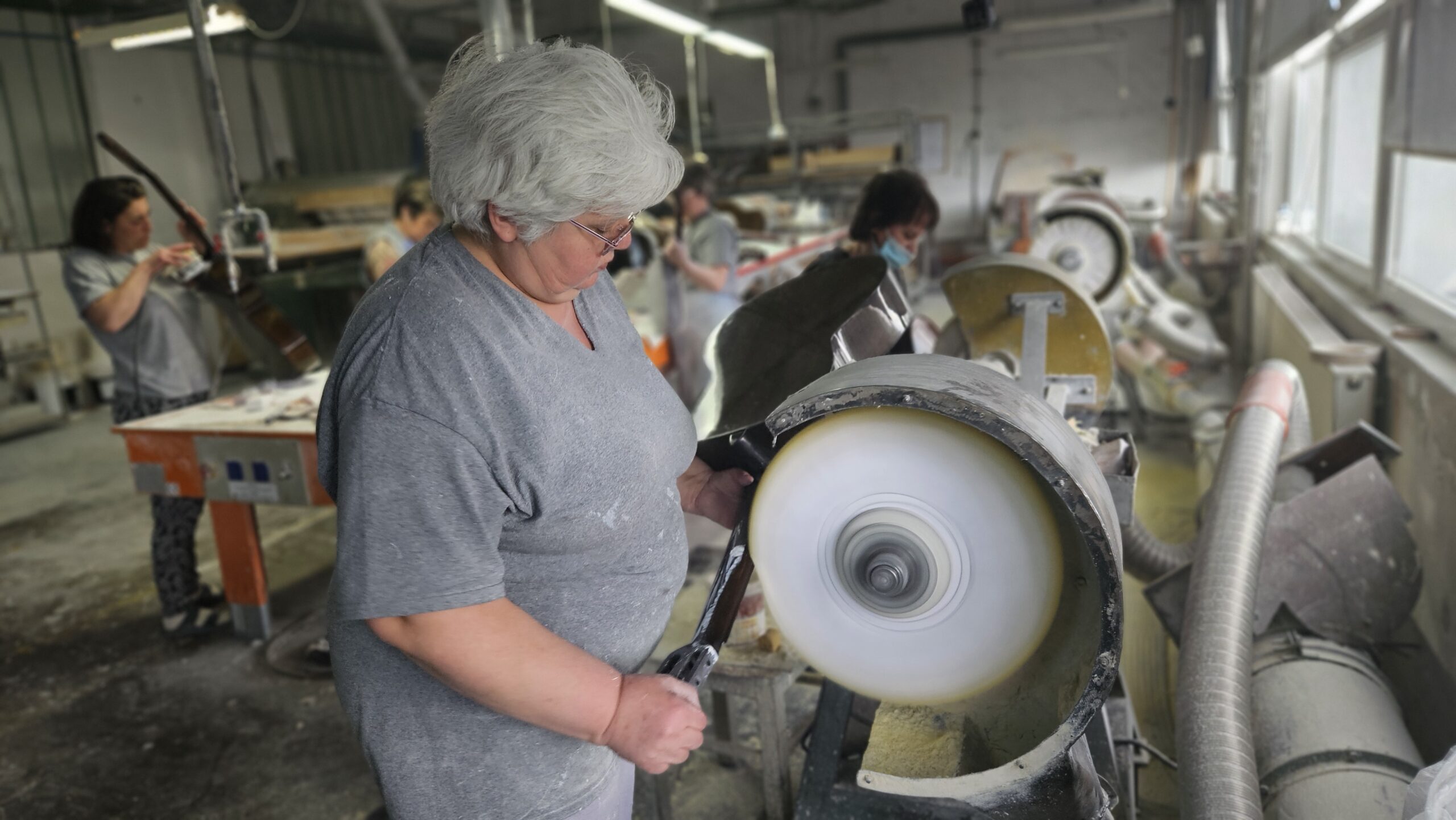
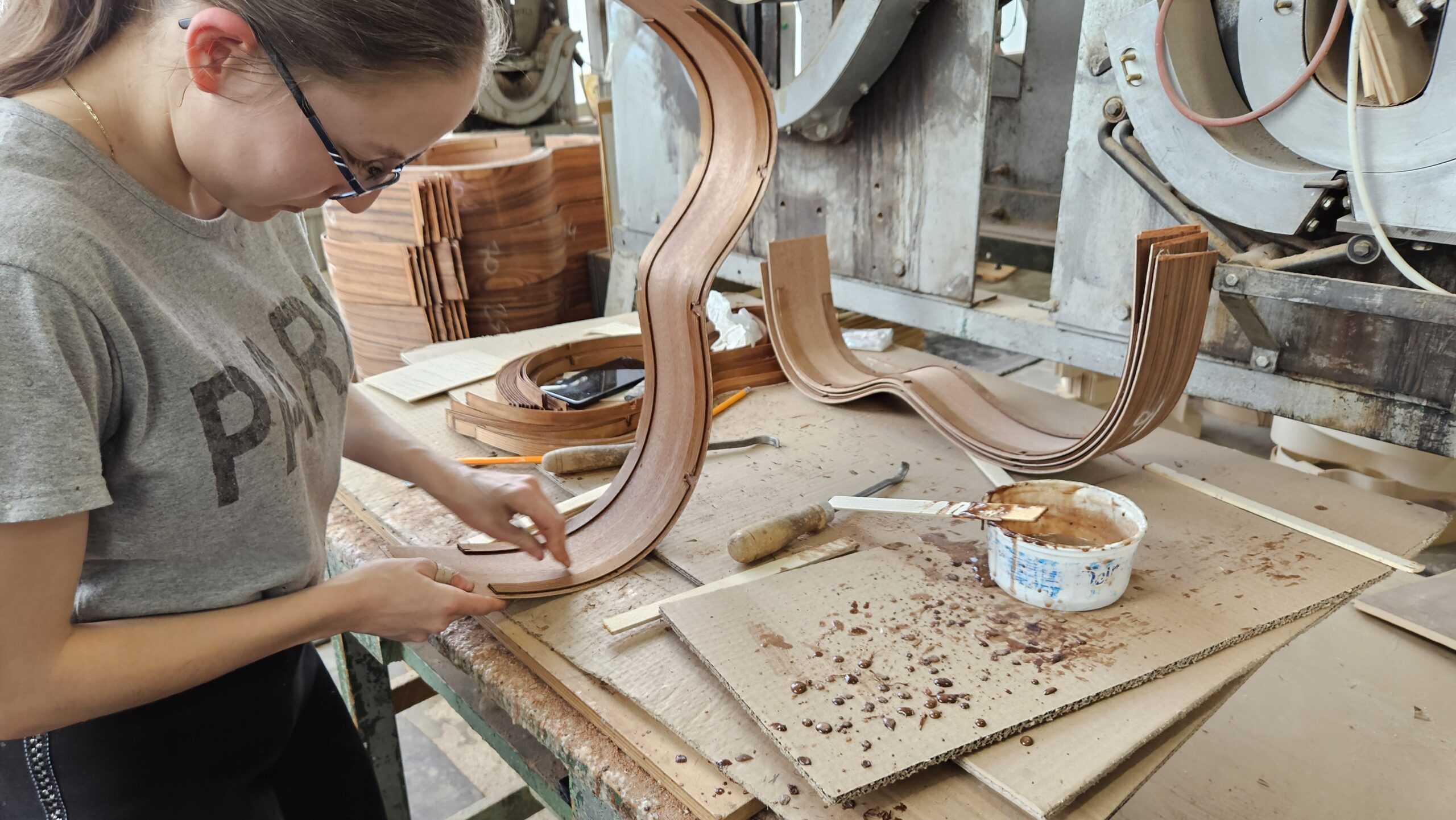
There is no mass production here in the classic sense. About half of each instrument is made by hand – sanded, glued, adjusted. Every millimeter matters.
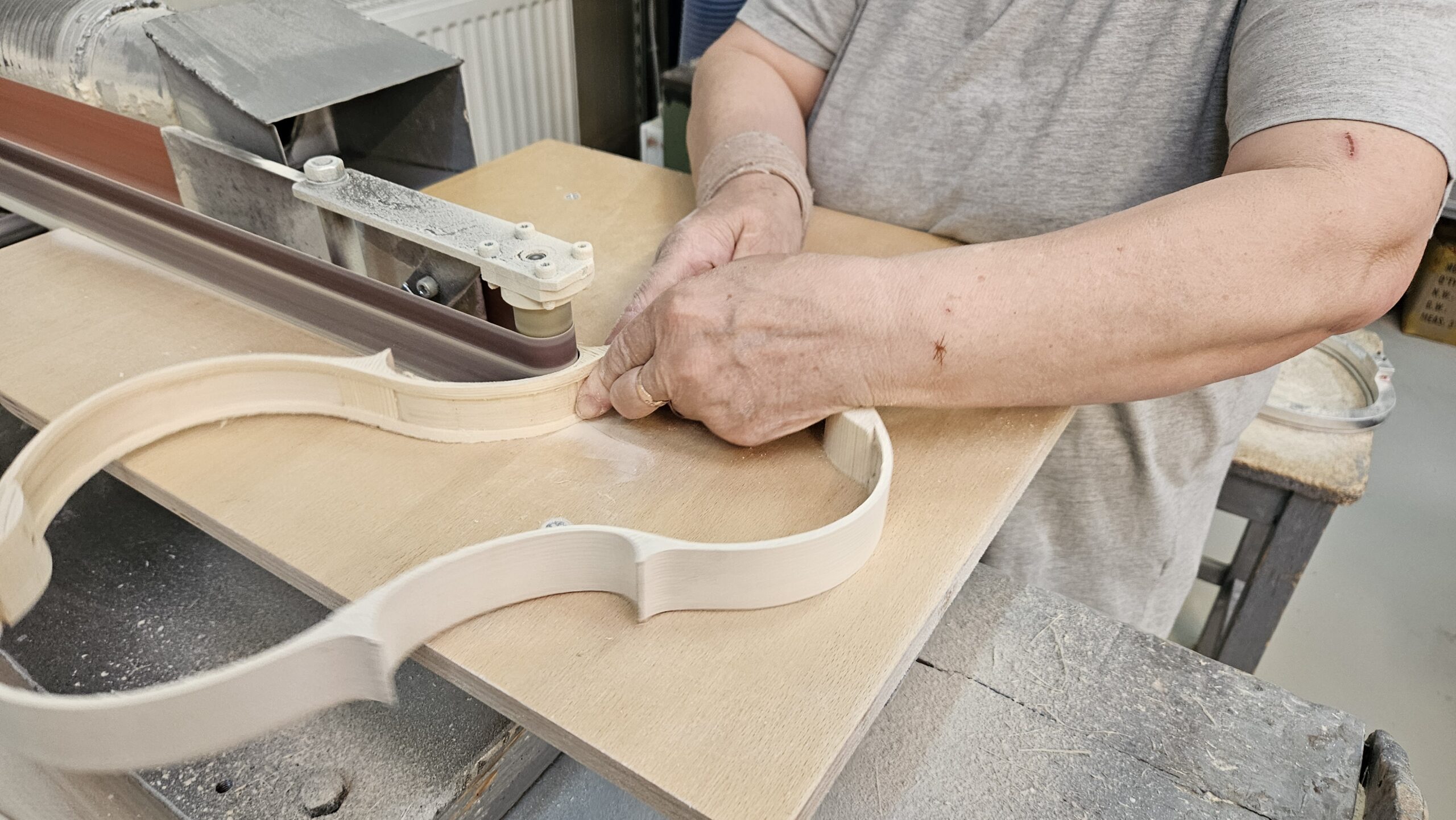
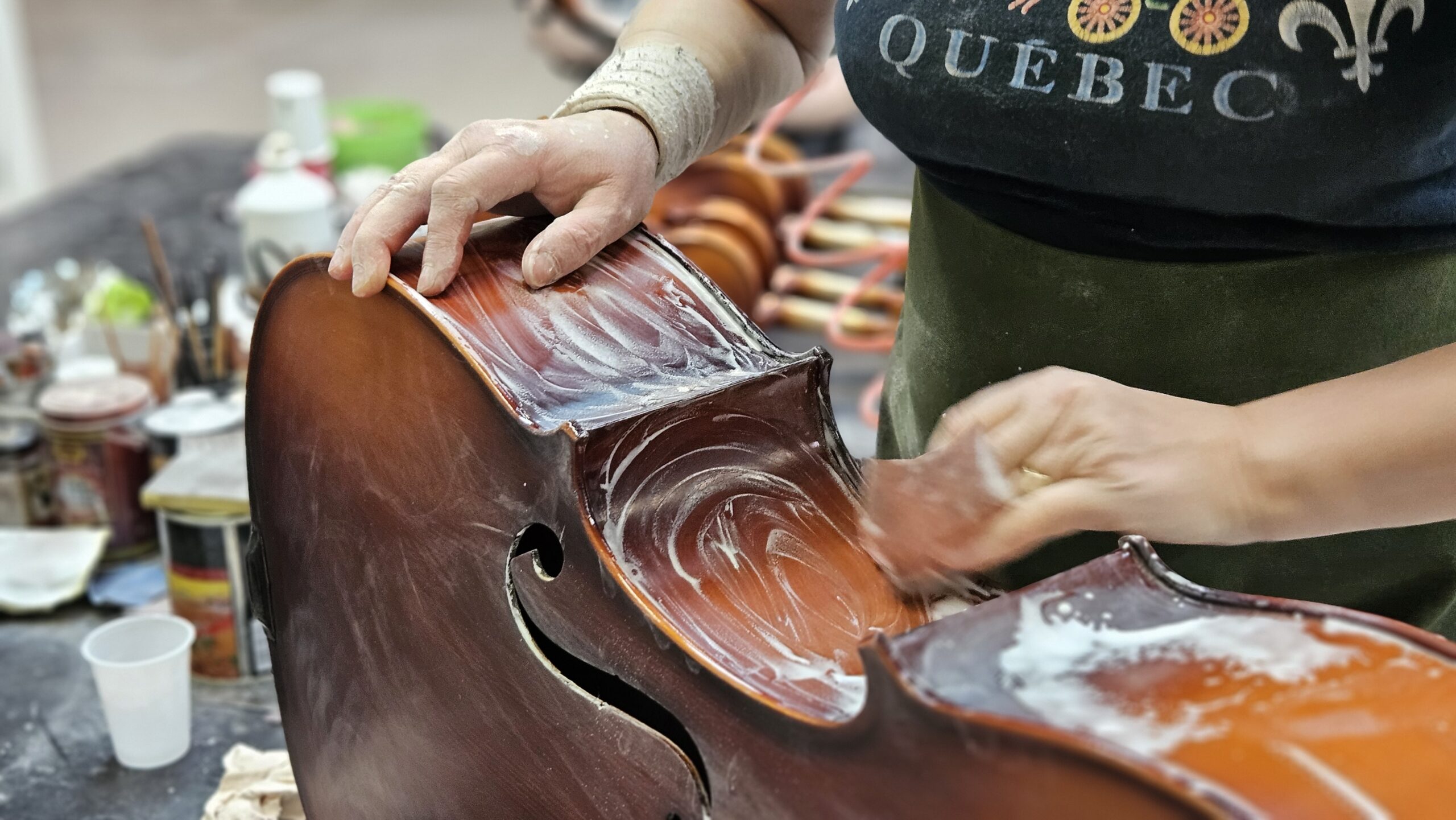
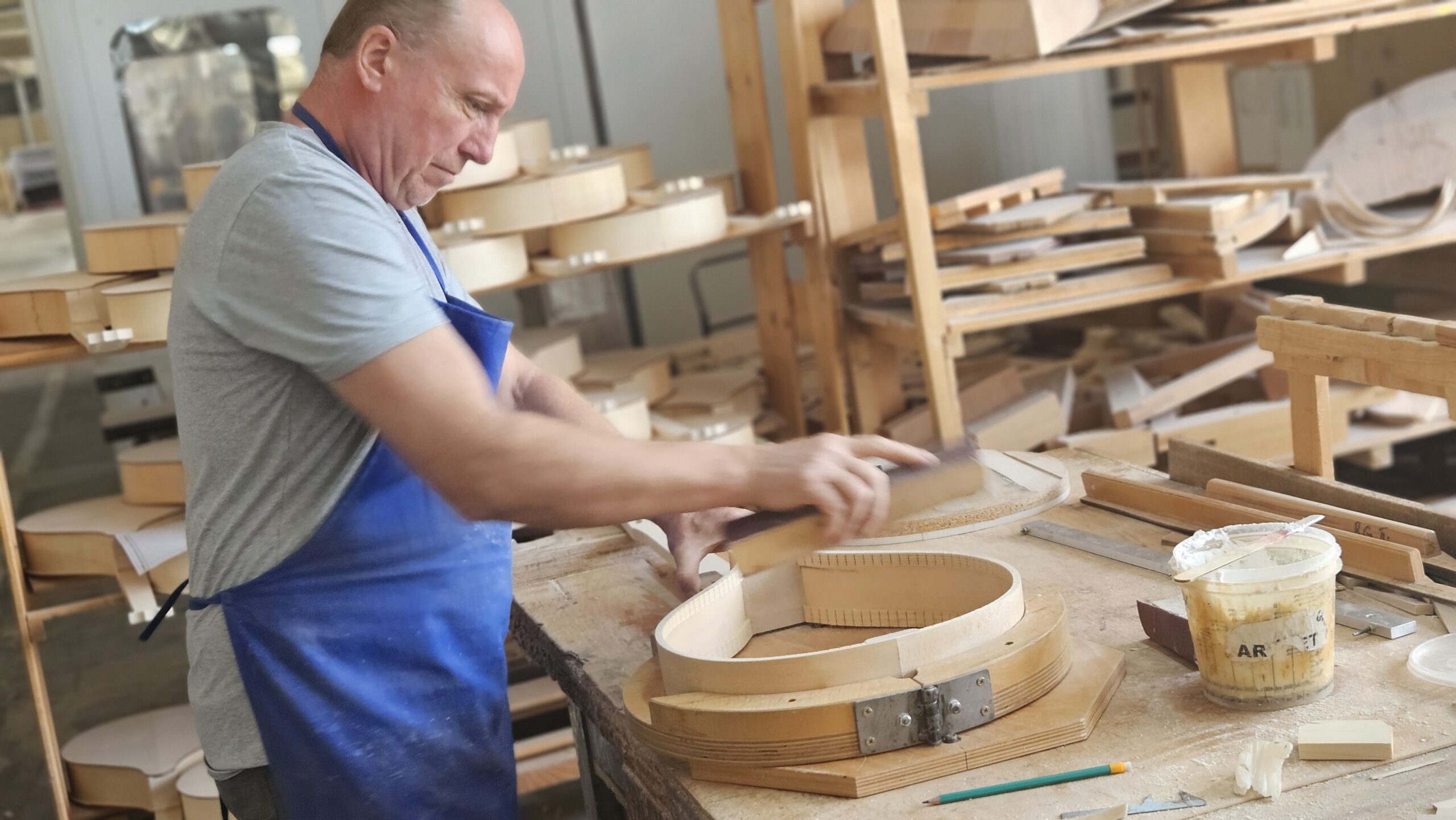
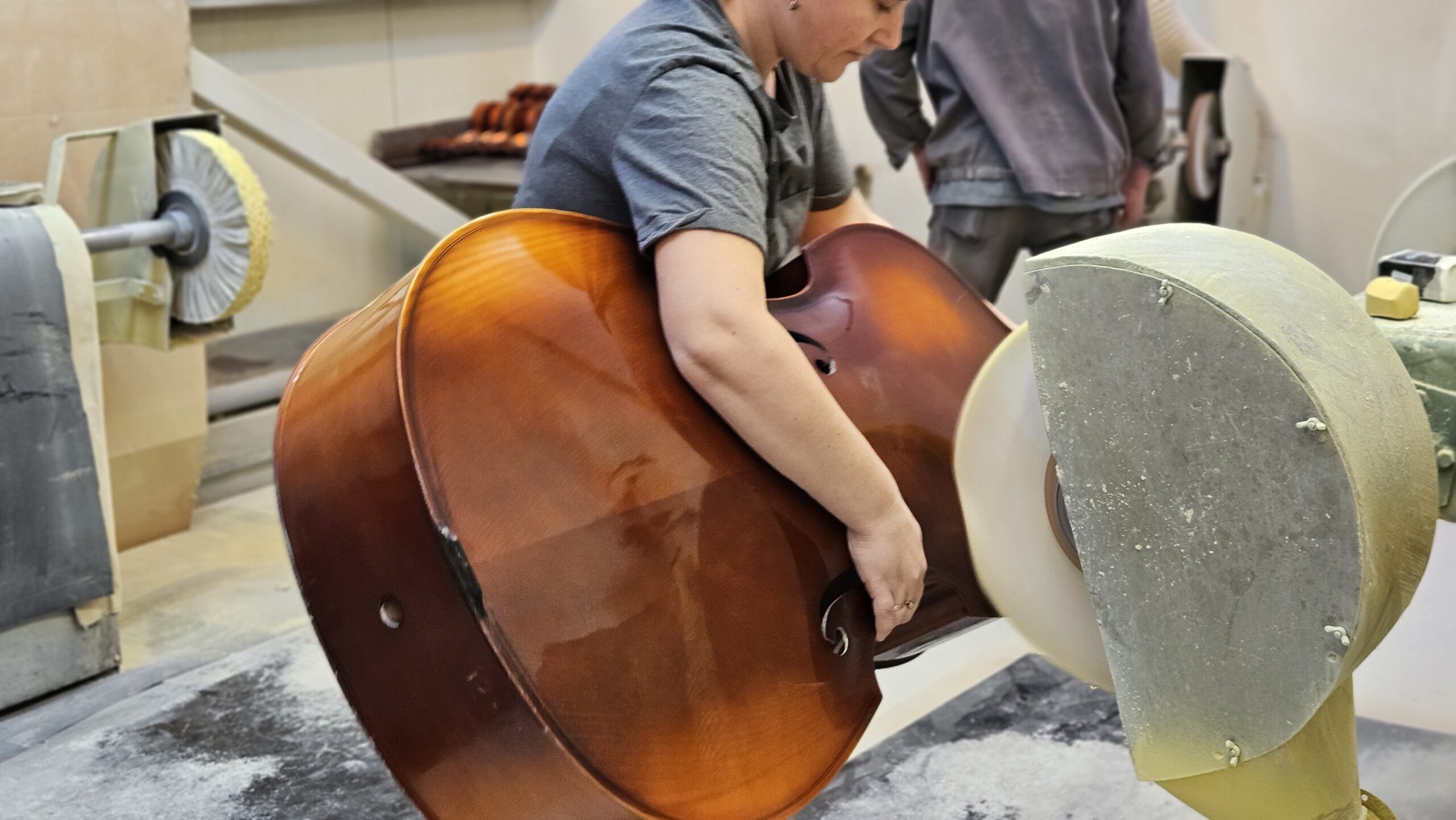
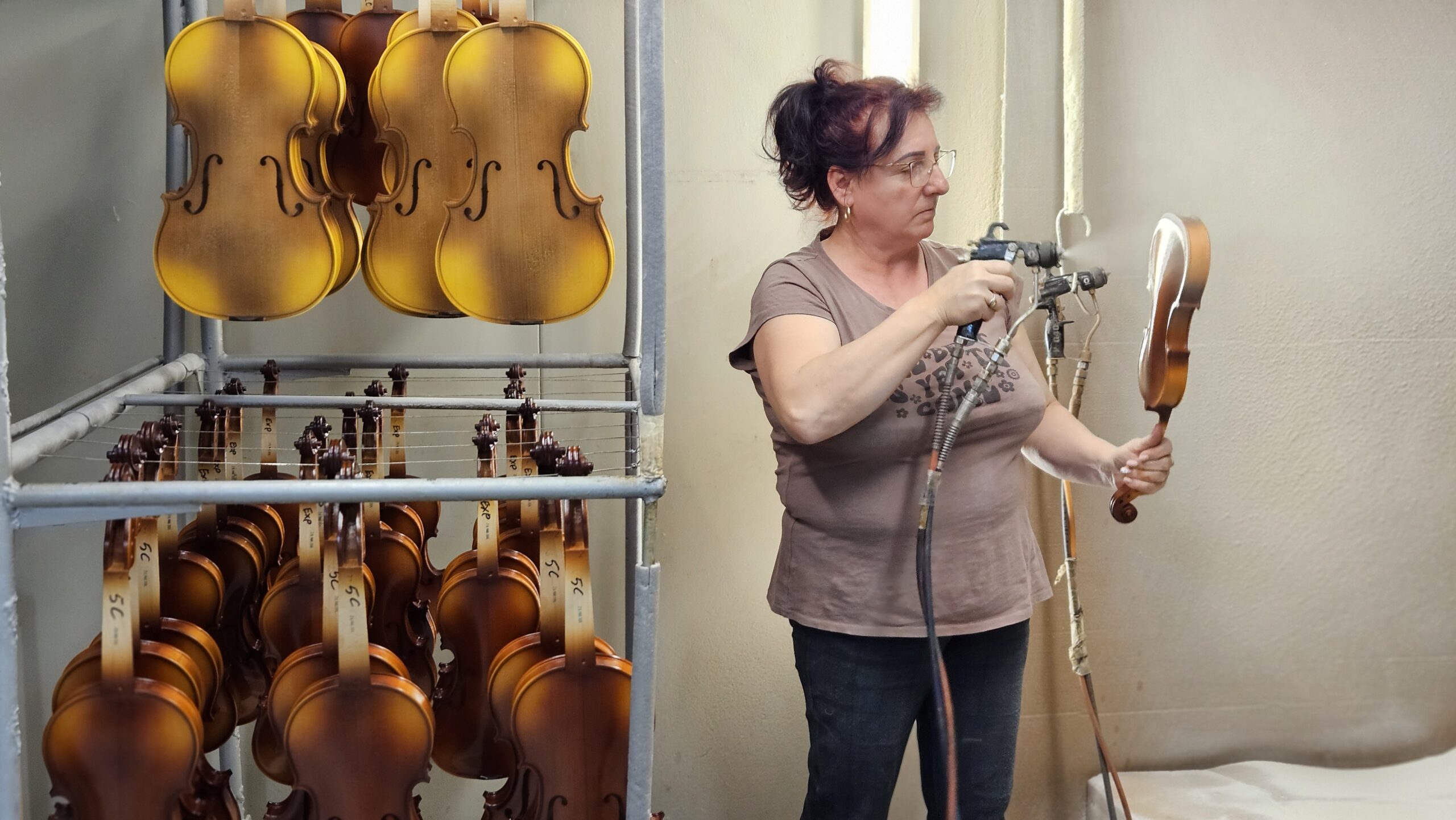
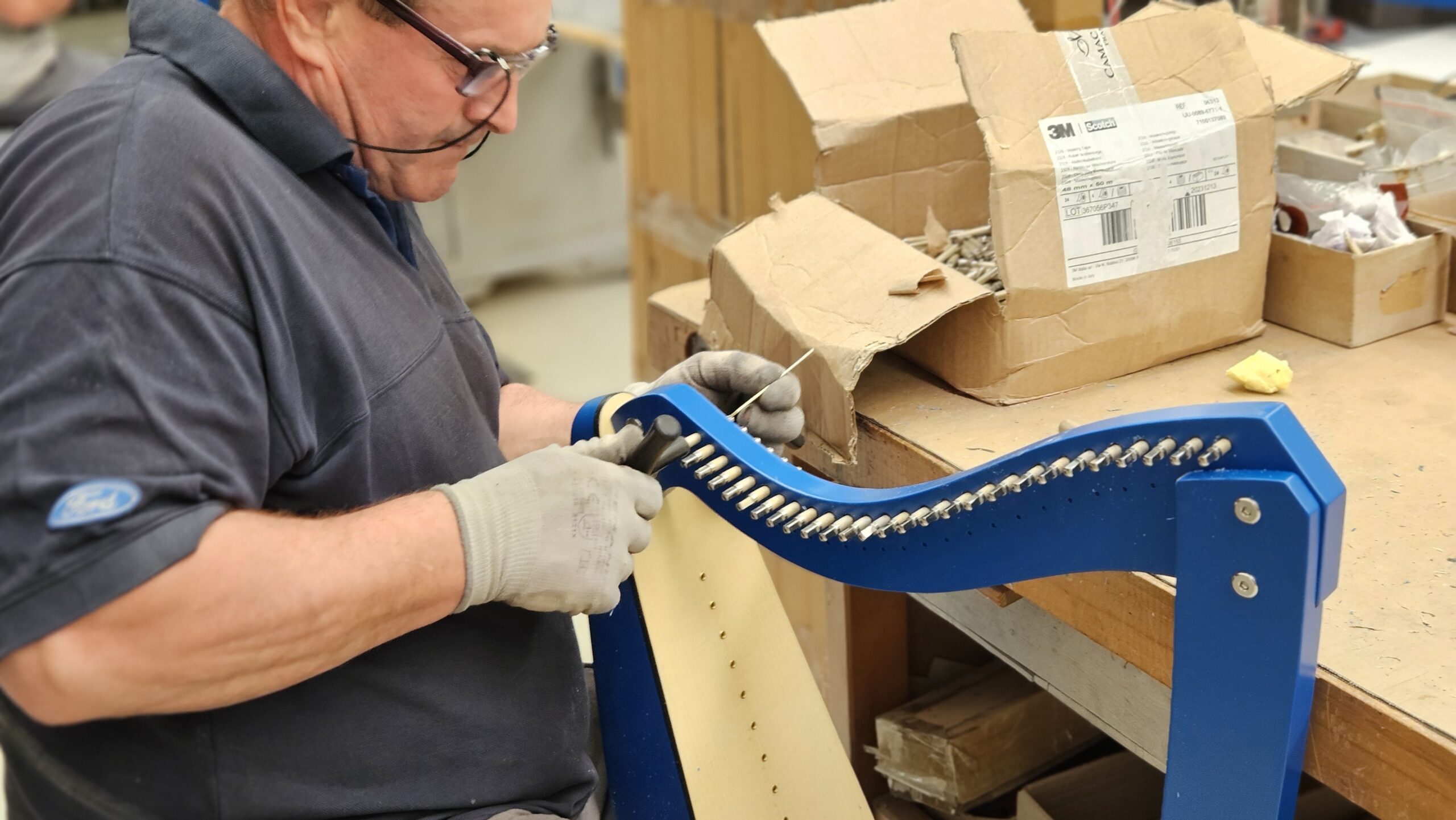
What the Reghin factory does is not just a story of craftsmanship. It is also an economic demonstration. With wood that would fill approximately 20 trucks, they produce instruments worth over €3 million every year. This is the essence of high-value wood use: to make the best possible use of each tree through proper sorting, so that each assortment is given the appropriate industrial destination, allowing maximum added value. This means creating jobs, innovation, culture, a sustainable forest bioeconomy. Caring for the forest, and for the community. Because Reghin does not live only from history, but from this living network of people who make, repair, and play music.
A Reality That Must Change
The Hora factory produces some of the most valuable wooden musical instruments in Europe, yet it faces a major problem: quality wood is increasingly difficult to obtain, even though our forests are managed through close-to-nature forestry precisely to produce superior wood assortments. The Romanian wood market is dominated by primary processors, who buy large volumes of wood for particleboard or rough lumber production. They are the preferred clients of wood suppliers, who avoid contracts with those needing small quantities but higher quality, in order to benefit from more favorable cash flow. National policies do not stimulate, and there is no minimal predictability for investments in high-value wood processing in Romania.
Hora Reghin Factory – Key Figures
- Founded in 1951, privatized after 1990
- Produces 36,000 instruments per year
- Consumes approximately 1,000 m³ of wood per year (about 20 truckloads)
- Socio-economic impact:
- Added value through wood processing: approx. €8,000/m³
- Direct fiscal contributions paid to the state: approx. €2,500/m³
- 170 employees
- Manual labor share: 40–50% of the process
- Exports to Europe, North and South America, Asia, Africa, Australia
In this context, Hora, like other companies that intensively process wood while adding high economic value, struggles to find suitable raw material for its long-life products. This limits both production pace and volume. This reality reflects a structural problem of Romania’s forestry sector: the lack of infrastructure and policy to support high-value processing and ensure equitable access to raw material for all processors, especially those who generate real value for the economy and local communities.
This reality highlights a paradox of Romania’s wood economy: those who add the greatest value do not have access to quality raw material. From here comes, more than ever, the need to rethink how we use wood from state-owned forests, in order to support high-value processing and the local economy, not just mass exploitation of resources and the highest possible short-term profits from managing publicly owned forests.
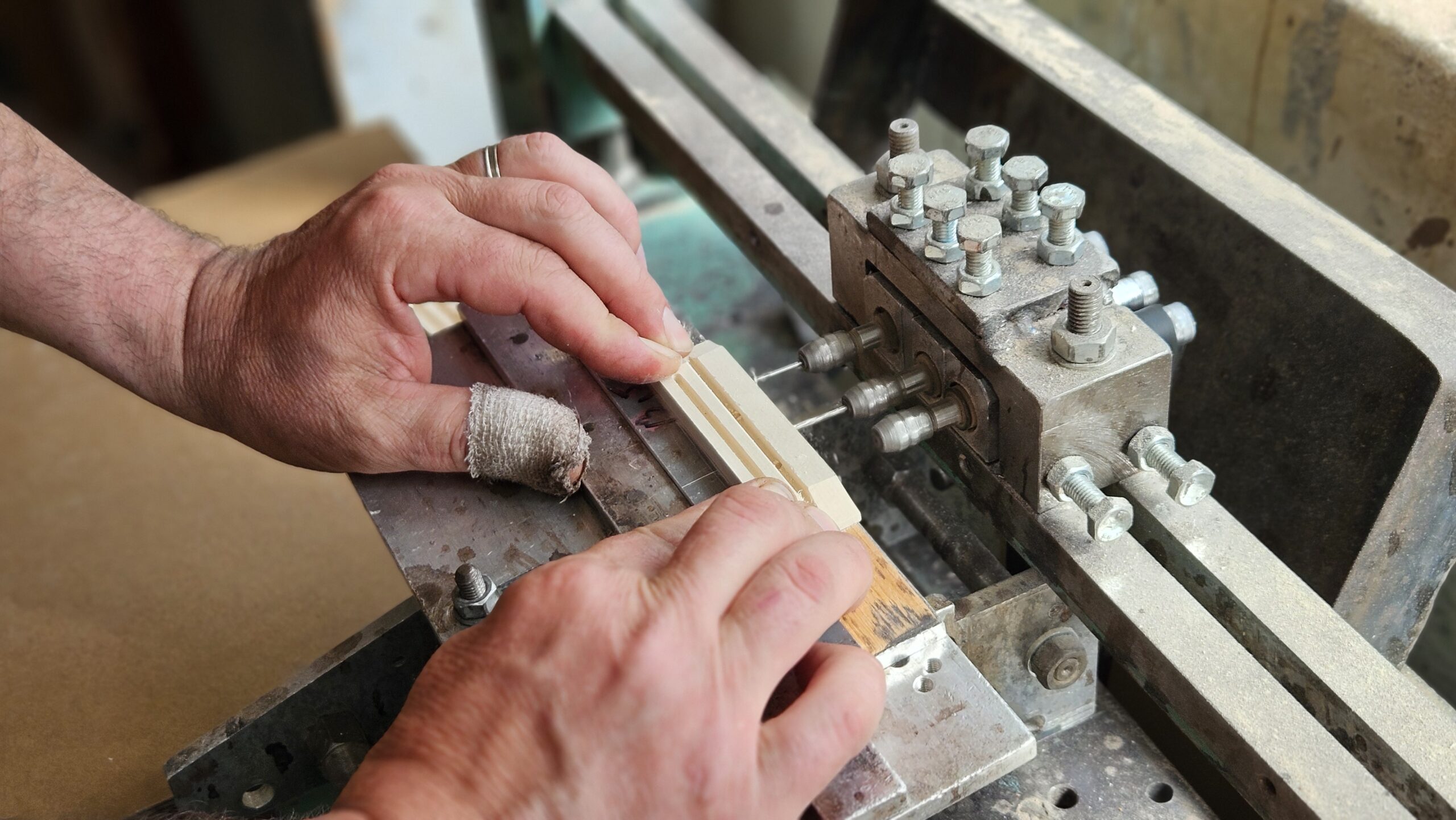
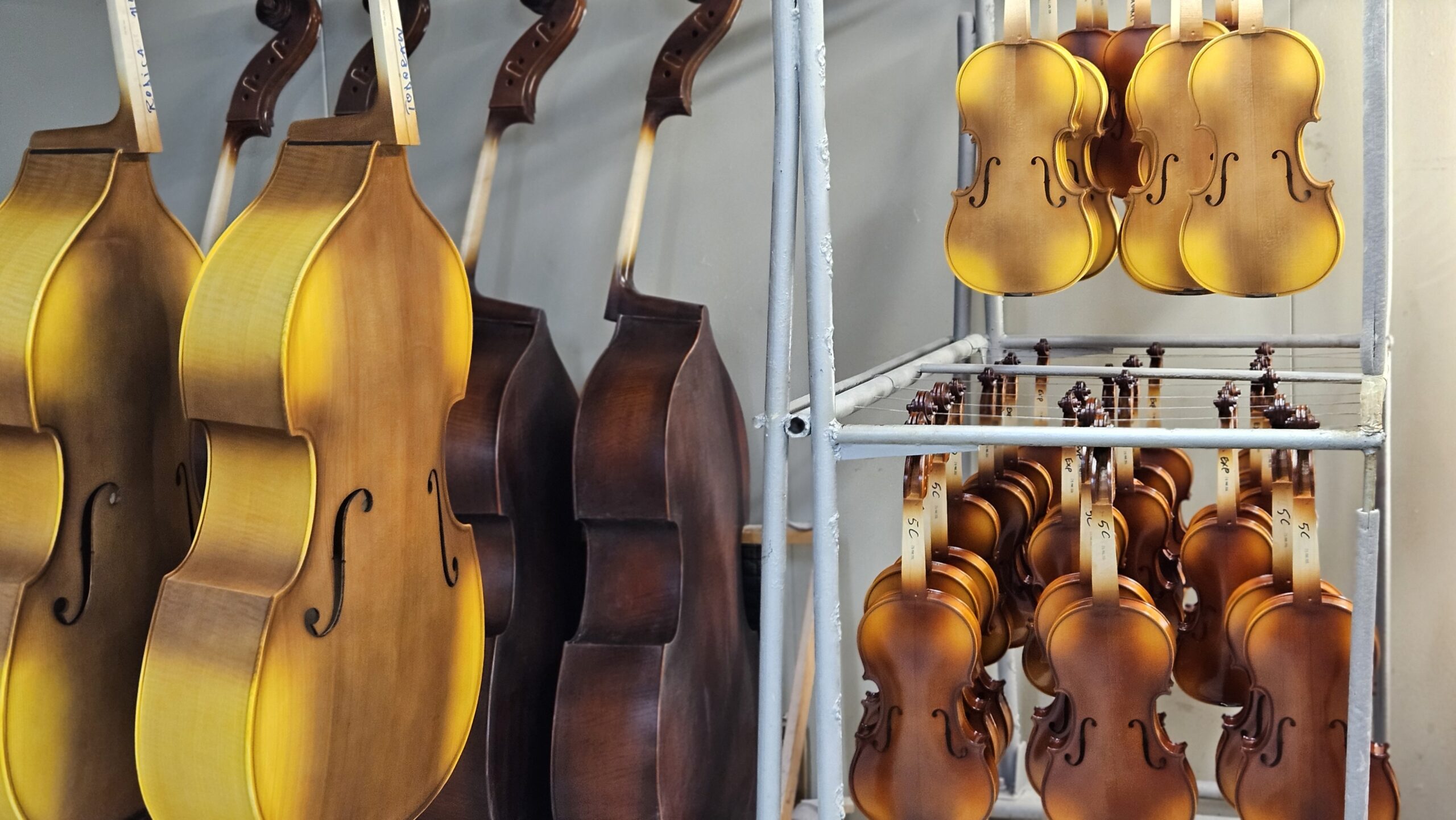
Let Us Not Waste What Cannot Return
A tree that produces resonance wood must be guided to ages exceeding 150 years. It grows slowly, in cold, in sun, in silence. It has lived through wars, droughts, snow. It has been shaped by everything it lacked. Once you cut it, as planned, you cannot turn back time. You have one chance: to value the wood. What do you do with it? Burn it, turn it into particleboard, export it as logs? Or let it find its voice in a product that may live another 100 years, giving life to the local socio-economic environment? Do we leave all this to the market, or do we build forest policies that stimulate the development of a sustainable forest bioeconomy?
In Reghin, every piece of wood has a purpose. Nothing is wasted. This is what it means to process with respect and wisdom. This is what it means to create value.
High-value use is not just a beautiful idea on paper. It is a practical, proven, scalable solution. It means producing more from less. Creating stable jobs, value-added products, local identity, and smart exports.
The Hora factory in Reghin shows that it is possible. With respect for wood. With care for people. With vision. This model is not just a success story from a town in Mureș. It is a possible future for Romania.