Less than three months remain until the deadline for submitting the final report on the “Identification of potential non-intervention areas (strict protection) in terrestrial and marine natural habitats, for the implementation of the EU Biodiversity Strategy 2030”.
We draw attention to the fact that, although the set of proposals under consultation includes a number of valuable proposals, the preliminary version of the delineations, taken as a whole, does not fully reflect the application of the principles and prioritization criteria assumed through the Identification Methodology.
We call on all stakeholders to become proactively and constructively involved in the public consultation process. At the same time, we request that the competent authority assume the direct and transparent coordination of this process, prior to the validation of the final report.
This study is part of Milestone no. 35 of the National Recovery and Resilience Plan (NRRP) and will remain a reference document for biodiversity conservation in Romania for the coming decades. The proposals formulated will have major importance for the conservation of biodiversity and natural heritage, but also a significant socio-economic impact, which requires a balanced and responsible approach.
Correct designation of protection areas starts with everyone’s involvement
We consider the active participation of all stakeholders essential – from administrations of protected natural areas, central and local authorities, forest districts and forest managers, to local communities, academia, and non-governmental organizations. Their involvement is crucial for an inclusive and credible process, directly coordinated by the competent authority, which will ultimately have to assume the results of this endeavor.
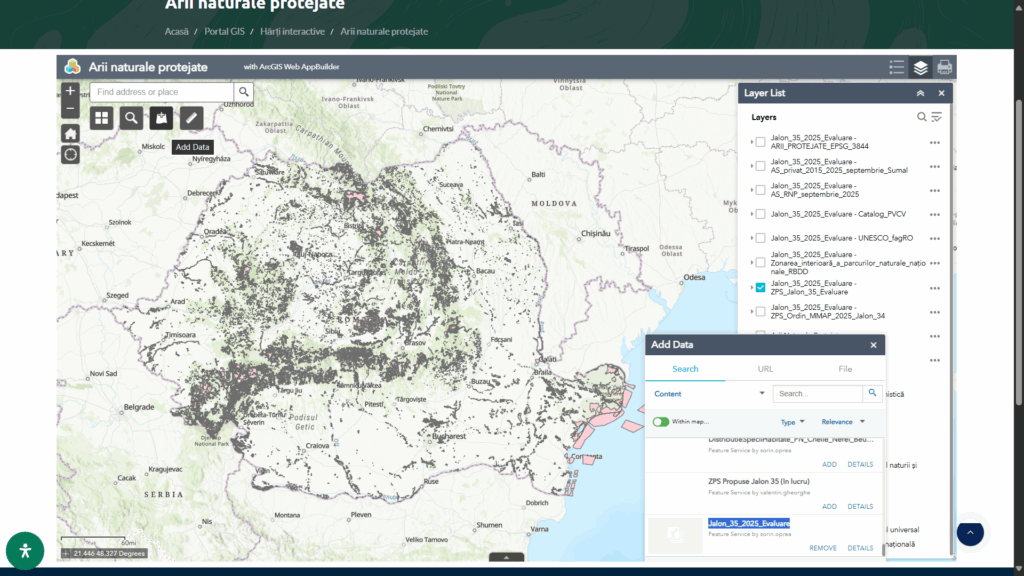
The KLADIA platform – “Non-intervention areas” project – may be used, as well as consultation of the available data (layer list “ZPS_Propuse_Jalon35”) from the interactive maps on the MMAP website, for data visualization, verification of proposals, and submission of technically substantiated observations. The contributions of all involved actors are decisive for the quality of the delineations and for the social legitimacy of the final result.
Avoiding errors from the Natura 2000 designation process
It is essential that, within this designation process, the shortcomings encountered during the establishment of the Natura 2000 network in Romania are not repeated. A genuine and inclusive involvement is needed, under the direct coordination of the competent authorities, based on solid scientific substantiation, closely following the priorities expressed in the Methodology.
At the same time, it is necessary to preliminarily establish functional compensation mechanisms for landowners and land managers, as well as to ensure a just transition for the affected communities.
Only in this way can we guarantee the sustainability of protection objectives and their alignment with major strategic documents – the National Forest Strategy 2030 (NFS2030), the new Forestry Code (Law no. 331/2024), and the European policy framework (EU Biodiversity Strategy 2030, Habitats Directive, Nature Restoration Regulation).
Issues that require resolution in the identification process
- The public consultation process was carried out with limited efficiency, failing to achieve real and constructive involvement of all stakeholders.
- The proposed areas show insufficient ecological connectivity and low representativeness of riparian forests and silvo-pastoral mosaic landscapes, although these habitat types are clearly mentioned in the Methodology as priorities for inclusion.
- An unbalanced distribution can be observed between biogeographical regions and administrative units – some counties include extensive areas, while others are very weakly represented, which limits ecological continuity and network coherence at national level.
- With regard to forests within the national forest fund, some of the proposed areas risk exacerbating imbalances in the age-class structure of forest stands, affecting the application of the principle of continuity of sustainable timber harvesting within the current forestry system, characterized by long production cycles and high harvesting ages.
Key principles that must be respected in implementation
- Ecological connectivity, by ensuring spatial coherence between proposed areas;
- Proportionality and balanced coverage of all biogeographical regions and habitat types, including up to approximately 700,000 ha of proposed forests, in line with the National Forest Strategy 2030 (NFS2030);
- Functionality of the network of strict protection areas with wide impact, including those with a “stepping-stone” role, taking into account biodiversity-deficient areas as well;
- Representativeness of biodiversity values and prioritization of ecosystems with multiple protection functions, including essential ecosystem services in critical contexts and for climate resilience, in accordance with OECM principles;
- Compatibility with major national infrastructure development objectives, the needs of local communities, and the continuity of sustainable harvesting.
Priority selection of the most valuable natural landscapes
In order to maximize the conservation of biodiversity values while minimizing socio-economic impact and strengthening administrative efficiency, we reiterate the need to prioritize the selection of Romania’s most valuable natural landscapes:
- Forests with a high degree of naturalness, which also fulfill multiple protection functions. Through the strict protection regime, the restoration of structures characteristic of old-growth forests will be enabled, without undermining, however, the continuity of close-to-nature management practices applied to forests for which the production process is regulated. In this regard, strict application of the provisions of Chapter C of the methodology is essential.
- Riparian forests outside the national forest fund. These complement the set of aquatic ecosystems with high ecological value, represented by watercourses and adjacent wetlands, together with their associated protective buffer zones. These habitats play an essential role in regulating the hydrological regime, ensuring longitudinal ecological connectivity, and maintaining water quality. At the same time, they provide refuges for terrestrial species in areas dominated by intensive agriculture and can significantly contribute to increasing the connectivity of the protected areas network. Moreover, waters, their banks, and naturally established riparian forests already benefit from legal provisions instituting a differentiated protection regime (i.e. the Water Law, the Nitrates Directive). Their designation as strict protection areas (compatible with the targeted application of flood prevention interventions) would strengthen the effective implementation of conservation measures on the ground. The creation of the “water cadastre”, recently announced by the Ministry of Environment, now allows rapid mapping of water sectors compatible with the strict protection regime. We are most likely talking about a cumulative area of several hundred thousand hectares at national level. And indeed, where if not in these areas is the protection role most needed?
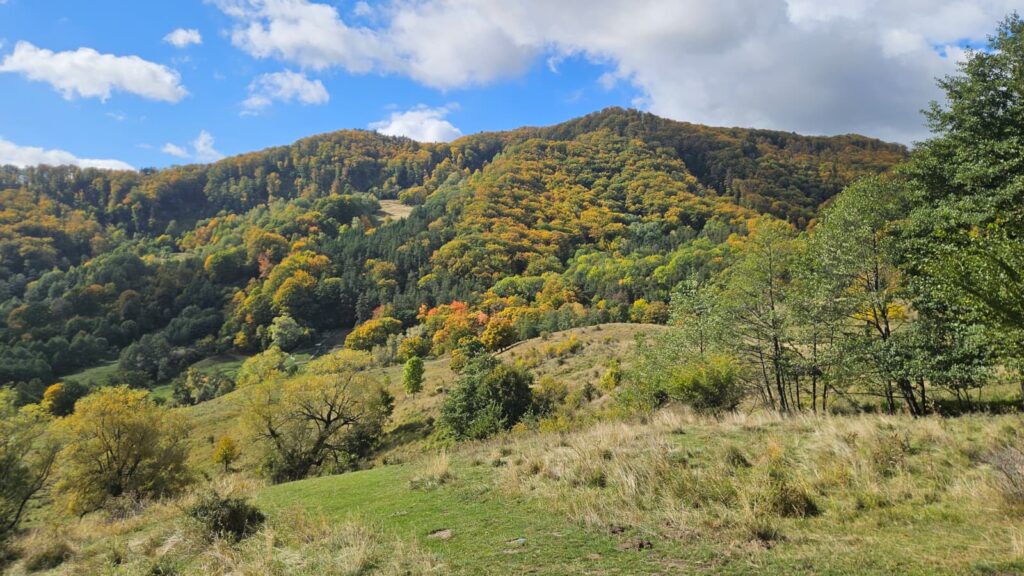
- Silvo-pastoral (agro-forestry) mosaic landscapes with high conservation value, represented by a mix of grassland–shrubland–forest habitats. We are essentially referring to those “cultural landscapes” of particular importance for biodiversity conservation and for improving ecological connectivity. Conservation efforts will, however, have a reduced socio-economic impact, since traditional practices such as grazing or mowing will actually be part of the protection regime (land abandonment or abandonment of traditional practices represents a threat to their ecological functionality as well). The silvo-pastoral (agro-forestry) mosaic landscape must be viewed ecologically as a unified whole, which maximizes its conservation value when wetlands and rocky/scree habitats are also included.
The future of biodiversity in Romania depends on the decisions taken now. We share a common responsibility to protect the most valuable ecosystems – for nature, for people, and for future generations.